 43
43

Funding fuzziness troubles governor
 Photo
Photo
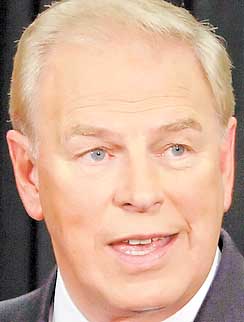
Ohio Democratic Gov. Ted Strickland
For this three-part series, Vindicator correspondent Marc Kovac interviewed Gov. Ted Strickland on his four years in office.
Sunday: Strickland’s legacy.
Today: Strickland worries about
federal and state cuts in funding.
Tuesday: Strickland’s outlook on Ohio’s future.
By Marc Kovac
COLUMBUS
Outgoing Gov. Ted Strickland said he is concerned about the effects of potential spending cuts on the future of the state.
In an interview with the Statehouse Bureau of Dix Newspapers and The Vindicator, the governor expressed worries about federal and state cuts and how they could lead to a double-dip recession.
“I think severely cutting back on investing in our people could do that,” he said. “... I think, during this recovery period, as we’re trying to deal with the aftereffects of this terrible, terrible recession, that the economy is still fragile. If the federal government pulls back on investing in job-creating activities and if at each of the state levels, Ohio being one of 50, if the states find themselves cutting back severely, it could have a depressive effect on the national economy that would be harmful to every state, including Ohio.”
He added, “Continuing to invest in education, continuing to make sure that the human service programs are adequately funded, Medicaid as an example. To make sure that we’re able to keep teachers and police officers and firefighters on the job. All of those things will have an effect upon the generalized economy, I believe. And much of the talk now is about cutting investments. That concerns me.”
Q. Do you have any better handle now on the budget hole the state is facing in the next biennium?
A. “There are several factors involved in that. It could be as high as $8 billion. It could be higher than that. Mr. Kasich’s decision to institute the final phase of the state income tax reduction, which I postponed to balance the state budget, could actually increase the deficit by an additional $800 million to $1 billion. ... If he were to eliminate the estate tax, that would even further increase the deficit. So I think it’s difficult to know because there are things you can do to reduce the deficit, but there are also things you can do to actually increase the deficit going forward. I’m not sure what actions the new administration [is] likely to take.”
Q. Can that hole be filled without some sort of tax increase?
A. “I think that’s difficult to answer right now. Raising taxes, in my judgment, in the middle of a recession can be depressive to the economy, but quite frankly at the federal level I think they could have and should have not continued the tax cuts for people making over $1 million, and I don’t know that it would have had any effect at all. I think raising taxes on struggling working folks right now would be very difficult. However, you know when you’re in public office, you’re continually confronted with decisions and tradeoffs. What I was determined to do and what I would have done had I been governor is to make sure that we did not renege on our commitment to education and that we did not allow the most vulnerable citizens of our state — basically those who rely upon Medicaid — to go without.”
Q. Chambers from Ohio’s largest cities recently released recommendations for transforming state government. Any thoughts on their ideas?
A. “It’s important to look at what can be done to become more efficient, to save money. But I also think it’s important to understand that society has an obligation to care about all of its citizens. What we need is a healthy business environment. I think Ohio has one. I think we certainly have the best, most competitive tax structure in the Midwest, one of the best in America now. But I think the long-term growth of our state will depend on our investment in education, and that’s what I think is most critical to long-term economic growth. It’s the kind of investment that you may not immediately see the results of, but if you neglect educating our people and our young people, keeping K-12 education at a high level in terms of quality and making sure that college and post-secondary education is accessible and affordable, if we don’t do those things, we’re going to be in real trouble.”