 43
43

Strickland: Legacy includes salvaging Ohio economy
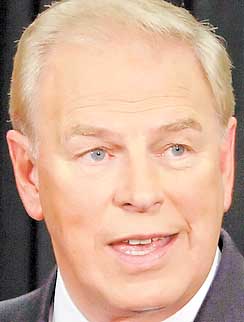
 Photo
Photo
Ohio Democratic Gov. Ted Strickland
For this three-part series, Vindicator correspondent Marc Kovac interviewed Gov. Ted Strickland on his four years in office.
Today: Strickland’s legacy.
Monday: Strickland worries about federal and state cuts in funding.
Tuesday: Strickland’s outlook on Ohio’s future.
By Marc Kovac
COLUMBUS
Yes, Gov. Ted Strickland has had a closed-door meeting with President Barack Obama.
No, he hasn’t made up his mind — at least in recent days — whether he’s going to seek some kind of federal appointment.
Yes, he plans to continue to be involved in public service.
No, he isn’t sure whether he’ll run for office again. That includes his former congressional seat.
“I hope to work until I die,” he said. “So retirement is not something that I will ever look forward to or will ever engage in. I probably will end up doing a number of things, not just one single thing, but I don’t know that for sure.”
He added, “... there are lots of things that I haven’t thought about that I may contemplate in the months and years to come.”
Strickland, 69, sat down recently with the Statehouse Bureau of Dix Newspapers and The Vindicator to review his term as governor.
He talked about his accomplishments, his regrets and his thoughts on the fragile state of Ohio’s economy.
Q. How do you want people to remember Gov. Ted Strickland?
A. “I hope people remember me as being a hard-working, honest, sincere governor who cared about people, didn’t put himself above the people that he was trying to serve. I hope they remember me as someone who cared about education and health care and energy, who worked hard to lay a foundation for economic growth even during very difficult economic times. Someone who was honest and cared and, as I frequently referred to in my speeches, someone who tried to live by the admonition of what’s required of us [is] to do justice, love mercy and walk humbly.”
Q. Everyone talks about a legacy. What’s your legacy?
A. “I don’t know what my legacy will be. We’ve done some good things in energy, and I think we’ve done a lot of good things in education at every level. I think we were able to successfully expand and renew the Third Frontier program. So I hope my legacy will be that of dealing with the most severe economic recession in 80 or so years and doing it responsibly while protecting Ohioans from the devastating consequences that quite frankly have befallen many other states.”
Q. Do you have any regrets?
A. “I have a few regrets. Not many, but a few. ... I regret appointing Tom Charles as inspector general. And I say that because I think Cathy Collins Taylor was a good, decent, honest person who was maligned in his report and was subjected to a politically motivated Senate hearing that led to her rejection. She’s a good person, and she was accused of illegal behavior, she was accused of perjury. And when the prosecutor looked at that, he decided that there was no justification for a perjury charge. And so I find it very troubling that a good person who gave her life to law enforcement and served, I think, about 30 years as a police officer, dangerous work, was treated so badly....
“Tom Charles obviously has a long career in law enforcement. I did not know him personally. What I say in a negative way ... I hope it’s not taken personally. But I’m just looking at the fact that I think he contributed to a good and decent honest person being injured, and I regret that.”
Q. If you had known that you were going to have only four years, would you have done anything differently?
“I don’t think so. I worked hard. I think we accomplished a lot. The most recent information that’s come out says that Ohio is one of only two states that has had a declining rate of unemployment for eight months in a row. Only two out of 50 states. Twenty-one states had unemployment rates that went up last month; Ohio’s continued to go down. I think we’ve laid a good foundation for future growth in Ohio, and I feel good about that. Even under the most difficult circumstances, we’ve continued to invest in education and in new energy production and research. We’ve been able to invest heavily in our infrastructure. Ohio is seeing jobs created and will see more jobs created in the future if we stay on track. I think the economy is still very fragile. And I think we need to be careful that we don’t do anything that would provide a shock to the economy and perhaps lead us to a double-dip recession.”