 43
43

College Prep 101
By Denise Dick
 Photo
Photo
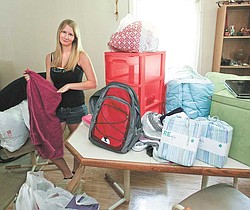
Nicci Dunkerton of Bristolville packs up in preparation for her freshman year at Hiram College.
With the start of college just a few weeks away, university officials offer some tips for students heading to college for the first time. Some advice:
Be patient and realistic. Students sometimes come to a new campus and think they’ll make instant friends.
Review orientation materials for information.
Get involved on campus.
Don’t be afraid to ask questions.
Use technology to connect to roommates, advisers, to what’s available and happening on campus.
Visit the campus either physically or electronically before classes start, and map out classes and determine where best to park.
Discuss finances with parent or spouse. Financial-aid information is available through university Web sites.
Set up a checking account and debit or credit cards before coming to campus.
Plan a work schedule. Allow enough time for work, classes, studying, family and yourself.
Source: college and university officials
Advice abounds for new freshmen
By DENISE DICK
BRISTOLVILLE
Later this month, Nicci Dunkerton, 18, a 2010 Maplewood High School graduate, will move away from home for the first time.
She has to be on the campus of Hiram College in Hiram, Ohio, on Aug. 25, where she’ll major in nursing. Classes begin Aug. 30.
In getting ready for the adventure, Dunkerton is using the former bedroom of her brother, who has since moved out of the family home, to store all of her college stuff.
She followed the tips in her college literature about what to bring, what to buy and how to prepare for the big move.
“I’ve bought bedding, a television, towels,” she said. “My mom told me to get a minifridge; evidently that’s a necessity.”
Other less-obvious things the college encouraged her to bring were safety pins and a sewing kit.
Dunkerton is a little leery about her roommate — she hasn’t yet met the person with whom she’ll share the small quarters — but she’s heard other people’s horror stories about roommates.
She doesn’t worry about the coursework — no one ever had to tell her to study growing up.
Dunkerton, who is the first in her family to go to college, is a little apprehensive, though, about being on her own, away from home for the first time.
“I’m the type of person who would forget my head if it wasn’t attached,” Dunkerton said. “My mom reminds me of what I need to do. What am I going to do without her?”
She’s reviewing the orientation literature, trying to figure out what textbooks to buy and the best place to buy them.
Dunkerton’s nerves are natural, university and college officials say. There are emotional, social and academic adjustments to be made as a student transitions from high school to college.
“At the center, our mission is to help students get acclimated, both socially and academically, to the institution,” said Jonelle Beatrice, associate executive director of Student Life and the director of the Center for Student Progress at Youngstown State University.
College marks the first time most students have had to borrow money and learn to manage both their time and themselves.
Review orientation materials provided by the school, Beatrice urges. Those include information that the college or university wants students to have such as maps, places, names and phone numbers for all kinds of assistance and ways to get connected on campus, Beatrice said.
Evan Beil, 18, of Boardman, will attend YSU this fall to study chemistry and biology. Ultimately, he wants to be a doctor.
Beil, who just graduated from Boardman High School, started taking classes at YSU while still in high school. He’s familiar with the campus and not worried about finding his classes.
“I’m excited,” he said. “There’s a lot of people from Boardman and other schools who I know who are going to YSU because the economy is bad and because it really is an excellent school.”
He looks forward to maintaining those friendships in college.
Beil plans to continue living at home and to drive to school and work. It’s more cost-effective that way, he says.
While Beil doesn’t anticipate problems connecting with people, not everyone has such an easy time.
“When you look at schools that are primarily commuter schools, for some students it’s a challenge for them to know how to integrate socially,” Beatrice said. They can tend to think of school as just being for class.
“Students who are involved on campus stay in college and graduate in higher rates,” she said.
Beatrice also urges new students to ask questions.
“Good students ask for help,” she said. “It’s not a sign of weakness. It’s a sign that you know what you need.”
Technology is also a good way to connect.
“Go to the university Web site where you can find campus jobs,” Beatrice said. “At a commuter school that’s the best way to connect is to get a job on campus.”
It’s a great way to network too, she said. Students can also pre-order books, link up with their roommate and advisers.
She also suggests planning ways to get involved before coming to campus, scoping out clubs and activities online. Before coming to campus, visit either physically or electronically and map out your classes and determine where to park.