 43
43

Drug-court graduates honored
By JOHN W. GOODWIN JR.
YOUNGSTOWN
Amy Heasley, by her own description, was a thief, addicted to drugs and broken in spirit — that was more than a year ago.
 Photo
Photo
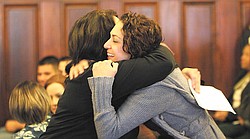
Nicolette Simkins of Meridian Services, right, gives a congratulatory hug to one of the graduates at the drug-court graduation ceremony at Mahoning County Common Pleas Court. Six people completed the requirements and graduated from the program Wednesday.
This week a smiling, high-spirited Heasley stood in the Mahoning County Common Pleas Court accepting a diploma declaring she had kicked the addiction to drugs that once ruled her life.
Heasley and five other graduates participated in the common-pleas drug-court graduation ceremony. The half-dozen graduates accepted diplomas and congratulations from a courtroom full of judges who once may have sentenced them to jail for crimes related to alcohol and drug abuse.
“This has been a wonderful program, and it saved my life,” Heasley said just before receiving her drug-court diploma. “I plan to stay drug-free, clean and sober.”
Amy Klumpp, program coordinator, said the drug-court program is no easy victory for those who graduate.
Klumpp said the program lasts for at least one year, during which time participants are required to complete treatment programs, make all restitution for their crimes, get a driver’s license, get a job or attend school, remain sober for six consecutive months and attend three meetings a week.
“This is an overwhelming program, it really is,” Klumpp said.
“People come in, and a lot don’t think they can do this, but 52 percent do graduate, and even those who don’t make it through the program have a seed planted about sobriety.” she said.
Judge John M. Durkin of common pleas court recognized the level of difficulty involved in completing the program. He said the accomplishments of the six participants is incredible.
Justin Sullivan, 22, entered drug court after problems with alcohol. He said the program may not work for everyone, but it did give him the opportunity to stop drinking and continue his college education.
“This program gave me the opportunity to find an alternative to drinking and meet some people and get my record expunged. Now I am going to [Youngstown State University] for accounting,” he said.
Jennifer Brunner, Ohio secretary of state and the ceremony’s keynote speaker, said of the drug court and its community impact:
“One of the best ways to help the community is to get these people better so they are not in the system and not committing crimes again.”
“What you have done today is very important and a wonderful start for you. You are changing the lives of so many people,” she said.