 43
43

Ukrainians unite to dance, eat and share at Valley fest
 Photo
Photo
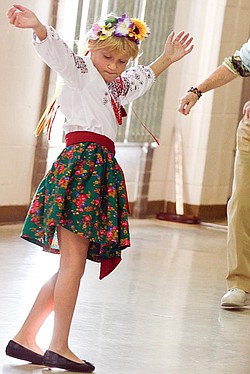
YOUTH MOVEMENT: Natalia Novicky, 7, of Austintown dances during the festivities at St. Anne Ukrainian Byzantine Catholic Church at the corner of Raccoon and Kirk roads in Austintown. Natalia was adopted from Ukraine four years ago by Dr. Dinah Fedyna.
 Photo
Photo
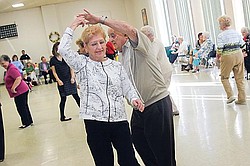
Mary and Dante Giancola of Youngstown dance to Jack Vasko Orchestra St. Anne during the the festivities at St. Anne Ukrainian Byzantine Catholic Church Sunday September 27, 2009
By Ed Runyan
AUSTINTOWN — Myron Lischak’s parents were both born in the Ukraine, and the family spoke Ukrainian in his Austintown house when he was a kid, so he never learned English until he entered kindergarten.
He assimilated pretty well during his elementary years, however, and by the time he entered Austintown Fitch High School, he didn’t appear different than the other kids, he said.
But Lischak, now from Brookfield, was different — in his native language, his family’s Ukrainian traditions and the foods he ate.
Today those traditions bring Lischak and his 11-year-old twin boys Nathan and Alexander a great deal of pride, he said Sunday at St. Anne Ukrainian Byzantine Catholic Church at South Raccoon and Kirk roads.
Lischak’s boys were part of a group of Ukrainian youths from three Ukrainian churches in the Youngstown area who danced at the St. Anne’s Ukrainian Festival, which returned to the church for the first time in four years Sunday.
Ukrainian dancing involves costumes with vibrant colors and embroidery, up-tempo music and fast-paced dance moves, said Lischak, who taught his sons the moves.
Marie Woloszyn of Youngstown’s West Side, who is also full-blooded Ukrainian, also taught the children at St. Anne’s to dance.
Woloszyn said when she was a student at Chaney High School, she and her fellow Ukrainians didn’t want to be singled out as “different.”
But on weekends at her church, Holy Trinity Ukrainian Byzantine Catholic Church on Rayen Avenue in Youngstown, the Ukrainians found joy in being Ukrainian. Ukraine is part of the former Soviet Union, near Russia, Poland Slovakia and Hungary.
And her children, all in their 30s, feel likewise, she said.
“I think they value and want to know where their roots came from. They love the traditions during Easter and Christmas,” she said.
Lischak said his sons have told him they love their Ukrainian traditions in part because they get to celebrate Christmas Dec. 25 and the Feast of St. Nicholas Dec. 6. St. Nicholas is a saint celebrated by Eastern European churches, said the Rev. Peter Tomas, pastor of St. Anne’s.
The church had a festival for many years while its school, St. Anne’s, was open, but the festival ended with the school, Father Tomas said.
Bringing the festival back is a way to provide some revenue to pay the large energy bills for the now vacant school building, as well as connect Ukrainians and other Eastern Europeans with their heritage, he said.
The idea seems to have gone over well, Father Tomas said, as the parking lot and church were full.
“There’s so many people,” he said. “It seems like we’re running out of food already, and it’s only 4 p.m.” The event continued until 7 p.m.
Dave Castick of Youngstown was in line to purchase Holubky (pigs in a blanket) and pyrohy, noting that other Ukrainian favorites are kovbasa and sauerkraut and halushky (noodles with cabbage).
Anna Blazina of Girard, another full-blooded Ukrainian, said the dishes are “good heart-warming foods” because “when you get older, you remember when everybody sat down together” at meals.
Such dishes were made from simple ingredients that were readily available, much of it from the garden, like cabbage and potatoes, Blazina said.
“When my parents came to this country, they didn’t have anything, so anything they got, they treasured. You didn’t waste anything,” she said. “They never forgot that they came here with nothing,” she said.
Tina Nemeth of Youngstown’s West Side, a Hungarian, came with an aunt and other Hungarian relatives and said they enjoy the traditions of the Ukrainians. She said Hungarians and other Eastern Europeans enjoy some of the same foods, even though they call them somewhat different names.
“You can’t beat the food, and we enjoy watching them dance,” Nemeth said.
runyan@vindy.com