 43
43

Losing at the gate, on the field took toll
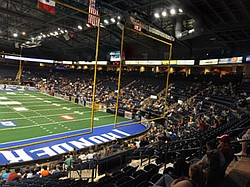
Covelli Centre panorama
 Video
Video
A panorama inside the Covelli Center in downtown Youngstown during an af2 Thunder game, May 30, 2009.
Thunder co-owner Jon Saadey said a winning season would have helped, but the poor economic climate contributed to the team’s eventual demise.
By JOHN BASSETTI
VINDICATOR SPORTS STAFF
YOUNGSTOWN — A little better understanding of the business and several more wins could have saved the Mahoning Valley Thunder from its termination as an af2 franchise.
“We tried hard, but it just didn’t work out,” said Dr. Jon Saadey, a team owner along with and Dr. Michael Slyk and Tim Chesney.
The Thunder ceased to exist when the owners notified the Chicago-based af2 of its intentions on Tuesday.
“We put together a class organization,” Saadey said of the product that played from late March to late July the last three summers.
“If you talk to players around the league and coaches, we really put together a class organization. What we did not do, successfully, is win. Unfortunately, you have to win in this town.”
Part of the ordeal was off-field, Saadey said.
“We just got put in a really bad position, let’s put it that way. Maybe it was just a lack of experience on our part,” said Saadey. “Looking back, would I have done a few things different? Maybe, but knowing what we knew at the time, we didn’t have anything else to go on, other than some people’s words. Things probably would have been different if I had known a little bit better.”
He elaborated.
“Like anything else new you go into, you just don’t know what’s out there. So, going through it, you live and learn. But we just didn’t have enough to keep it going. I felt that if we had one more year, things would have really turned around for us, but we just couldn’t afford to lose any more money.”
Saadey was asked if the ownership was handcuffed by limitations via in the team’s agreement with the arena.
“That may have something to do with it. The Covelli Center [previously the Chevrolet Centre] has to make money, and we understand that, but we didn’t think we had a bad deal going in — maybe not quite as good as some deals that are out there.
“We understand that the Centre needed to make money and I don’t blame anybody,” he added. “When something goes wrong in my life, I blame myself first, maybe to a fault. Because of that, I view it as a personal failure and it really tore my guts out. But it’s time to move on and direct my attention back to my [dental] practice.”
Saadey said the initial deal with the Covelli Centre was for three years, but the Thunder could have departed after the first two seasons.
“If we decided not to play after year two, it would have just dropped,” he said. “But, to give it a real fair shake, we really thought we should give it three years. But this year was just abysmal, financially, as well as on the field. We just really never caught a break. As hard as we tried we just never caught that break that we needed.”
The Thunder’s agreement with the af2 was year to year.
If the team returned for a fourth season, Saadey said Chris MacKeown would have been his choice as coach.
“I would have him back in a second. That was the best decision we made [to hire him],” said Saadey. “He was awesome. Everything he did was top-notch and he never stopped working. He was a class act and I appreciate all his efforts. If we were going forward next year, that’s the first guy I’d bring back — that’s where I’d start.”
Saadey regrets that the ownership and community couldn’t have had a better collective experience.
“We thank everyone who supported us. We’re sorry we couldn’t bring it back, but you can only lose so much money,” he said. “We’re not bitter. We feel bad. We wanted it to work, but, at the end of the day, we just couldn’t break even. That’s all we were ever trying to do is break even.”
Eric Ryan, director of the Covelli Centre, said he’s disappointed in the Thunder’s decision, but understands the business side of things.
“The af2 is a difficult league to succeed in. There seems to be a lot of teams suspending operations,” said Ryan. “Obviously, we’re disappointed, but we’re going to take a close look whether the market can support two major tenants. We want to look if we want to stick with hockey and have other events, too.”
He said that there’s a lot more than selling tickets that goes into running a minor league franchise.
“There’s only so much corporate and sponsorship dollars out there. A lot of people are pulling back, so we need to be careful where it’s too much for the market to beat. From an arena standpoint, we’ll try to book some dates in the spots the Thunder had and we’ll be fine.”
bassetti@vindy.com