 43
43

Ohio Supreme Court to consider racetrack-slots vote
 Photo
Photo
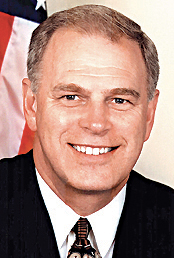
Ohio Governor Ted Strickland (D-Lisbon)
The state’s high court will issue its decision in coming weeks.
By Marc Kovac
COLUMBUS — Did lawmakers and Gov. Ted Strickland simply direct how money would be spent, or did they make a major law change subject to citizen repeal when they passed a budget that included slot machines at Ohio’s horse-racing tracks?
That’s the question before the Ohio Supreme Court, which must decide whether opponents of video-lottery terminals have a right to put the gaming expansion before voters.
LetOhioVote.org says it should be allowed to gather signatures to force a referendum on the slots issue, placing it before voters as early as May.
“The provisions we’re challenging don’t earmark a dime for anything,” said Michael Carvin, legal counsel for the plaintiffs. He added, “Under their theory, they could have Black Jack, roulette and every other [casino game] throughout the state, and we wouldn’t be able to [put the issue before voters]. Well, some citizens see a difference between raffle and a lottery and slot machines at race tracks, and they have a constitutional right, as they did in 2006, to express that disagreement.”
But state officials say the Ohio Lottery Commission already had the authority to offer the video-slot terminals at racetracks. The slots language was included as part of an appropriations bill — the 2010-11 biennial budget — and, thus, is exempt from the referendum attempt.
“The VLT provisions are inextricably linked to a $2.3 billion appropriation to local schools,” said Benjamin Mizer, representing the Ohio Lottery Commission and the state’s Office of Budget and Management. He added, “To raise money by means of the lottery is to appropriate it for education.”
The state’s high court heard oral arguments on the case Wednesday and will issue its decision in coming weeks.
The case has big implications for the already tight state budget, potentially tying up nearly $1 billion in revenues earmarked for school funding.
It was the second case to be heard by justices this week that could affect the two-year operating budget. On Tuesday, the court heard from grocers who say they shouldn’t have to pay the state’s commercial activity tax on their gross receipts, a case that could end up costing the state upward of $700 million.
Earlier this year, faced with grim revenue forecasts and continued economic decline, Strickland announced his support for placing slot machines at the state’s seven horse-racing tracks, under the authority of the Ohio Lottery Commission. Lawmakers subsequently included language in the biennial-budget bill acknowledging that the commission had the power to offer slots and outlining the process for implementing rules for the new system.
Generally, Ohio citizens have a constitutional right to repeal new laws via a referendum process that involves gathering signatures on petitions and placing the issue before voters. There are several exemptions to that process, however, including appropriations — spending authority granted by lawmakers for the state’s operating expenses. The slots language was included in the two-year budget, which supporters say makes it an appropriation.
But LetOhioVote.org said the video-lottery-terminal language is a broad-reaching law change and not an appropriation.
As such, shortly after the budget was signed into law, the group attempted to submit signatures to the secretary of state’s office to start the referendum process.
But neither the secretary of state nor the attorney general would accept the petitions, citing language included in the budget bill that specified that the slots provisions were not subject to referendum.
LetOhioVote.org then filed suit with the Supreme Court to allow the referendum effort to move forward.
“We just want 90 days to, as the constitution guarantees, to go out, collect the signatures and, if sufficient, to have a referendum election at the next scheduled election,” Carvin said.
Even if that election occurs and voters reject the video-lottery-terminal language included in the budget bill, a bigger legal question remains: Did the governor and the lottery commission have authority to allow slots at horse tracks?
“The Lottery Commission, if and when we win that election, would have a decision to make: whether they’re going to proceed on this adventurous legal theory that was advanced for the first time ... which is we’ve always had this power, just nobody knew about it,” Carvin said.
He added, “When they confront that issue, they will have had a majority of Ohio citizens saying we don’t want [slots].”
mkovac@dixcom.com