 43
43

YSU officials favor razing 1,278-space facility
 Photo
Photo
YSU President David C. Sweet
 Photo
Photo
Former Sen. Harry Meshel
The university administration wants to eliminate a parking deck and create surface lots.
By Harold Gwin
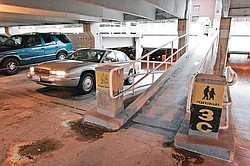
YOUNGSTOWN — Youngstown State University wants to move forward with plans to tear down its Lincoln Avenue parking deck, but not before it creates some surface parking to help cover the loss of the deck’s 1,278 parking spaces.
The goal would be to create 866 surface-lot parking spaces before the deck is razed and replaced with a 375-space surface lot.
YSU administrators outlined the plan at a recent meeting of the Finance and Facilities Committee of the university’s board of trustees, but not everyone was comfortable with the proposal.
The administration offered three possible scenarios.
One would be to tear down and replace the deck at a cost estimated at $25 million.
A second would be a $4.1 million renovation of the deck to give it perhaps an additional 15 years of use.
The third, and the one recommended to trustees, calls for demolition of the deck and replacement of the lost parking with various surface lots, a project with a price tag estimated at $8.67 million.
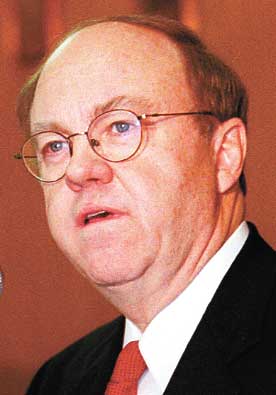
Trustee Harry Meshel, committee chairman, said he prefers option No. 2. It’s better for the students in terms of parking-space issues and for the university’s uncertain future finances, he said.
However, the university might want to make other use of that site in the near future, said Gene Grilli, vice president for finance and administration, suggesting that it would be ideal space for classrooms, perhaps a new building for the College of Science, Technology, Engineering and Mathematics.
Grilli also pointed out that the deck has some structural problems.
It was built in 1972, and its useful life is nearing its end, university officials have said.
Even if it is preserved for 15 more years, the university still will have to tear it down after that. Demolition cost now is estimated at about $1 million.
Danny O’Connell, director of support services, told the trustees that if the university went with option two, the deck would have to be closed for at least six months, and its parking spaces would be lost during the renovation period.
The trustees already have earmarked $4.1 million for the project, planning to take that money from some $20 million the university intends to borrow next spring. The original intent was to tear down the deck and replace it with a 275-space surface lot on the same site at that price, with the project slated to take from April to August next year.
Grilli said additional funding sources would have to be found to finance the entire $8.67 million recommended plan.
David C. Sweet, YSU president, said that individuals with disabilities and others find the current Lincoln Avenue deck inaccessible. The trustees, in the past, have identified the area west of Fifth Avenue for future parking development, he said.
The administration’s recommendation points out that its proposal provides a cost-effective way of providing for parking needs until YSU can afford to build a new deck west of Fifth Avenue.
YSU’s Student Government Association passed a resolution last spring urging the university to consider renovating the Lincoln Avenue deck rather than razing it, giving the university time to develop other parking facilities.
Under the administration’s plan, demolition would be delayed until 866 surface parking spots are developed at various locations around the eastern, southern and western edges of campus.
That would involve creating 496 permanent spaces on property the university already owns, leasing space for 225 more spaces, creating 75 temporary spaces on YSU land and buying a parcel of property to provide an additional 70 spaces.
Daniel DeMaiolo, student member of the trustee board, questioned the distance some of those scattered sites would be from classroom buildings and asked if the campus shuttle system might be extended to those lots.
That could happen, Grilli said. However, the scattered sites might make it possible for some commuter students to actually park closer to their classrooms than the Lincoln Avenue deck location, he said. The university now has about 6,100 parking spaces, but only about 1,300 of its 14,700 students live on campus.
A fall 2008 parking survey showed that most of the parking lots are never more than about 90 percent occupied, except for the Lincoln Avenue deck, which is generally full between 8 a.m. and 2 p.m. weekdays.
Trustee Carole Weimer asked about safety for students who would be parking in the more remote locations.
O’Connell said planners are working with the campus police on finding parking locations and that the police found the proposed sites acceptable. All will be fenced and well-lit, and some already are covered by nearby camera-surveillance systems, he said.
Scott Schulick, trustee president, said the administration report is “a good start for discussion.”
He said he isn’t advocating any of the three options at this point but wants the administration to come up with a final plan to present to the board in December.
gwin@vindy.com