 43
43

A FALL IN SALES
 Photo
Photo
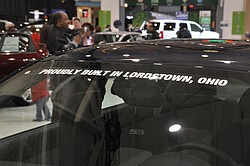
Lordstown-built Chevrolet Cobalt at the 2009 Cleveland Auto Show
 Photo
Photo
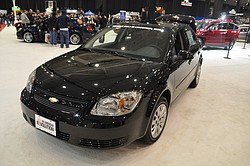
Chevrolet Cobalt at the 2009 Cleveland Auto Show
 Photo
Photo
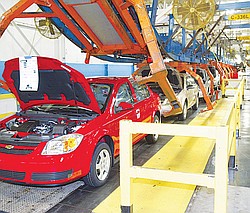
In this Vindicator archive photo, Cobalts are seen on the assembly line at GM Lordstown.
Cobalt numbers drop as GM sees gain
Demand for new cars and crossovers fueled better results for GM and Ford.
STAFF/WIRE REPORT
The Chevrolet Cobalt posted its worst sales month since the early days of its launch, despite General Motors’ notching its first monthly gain in U.S. sales in almost two years.
Cobalt sales were down in October because inventories at dealerships were wiped out by the federal Cash for Clunkers program in July and August, said Barry Gonis, general manager of Spitzer Chevrolet in North Jackson.
The program offered up to $4,500 to car buyers who turned in certain older vehicles.
There was a delay in replacing the Cobalts because the GM Lordstown complex was in the process of changing over to the 2010 model, Gonis said.
He said his dealership had only one Cobalt for most of the month.
Supplies have started to come in, however.
Spitzer Chevrolet had 21 on Tuesday, and Gonis expects to have 60 by the end of November.
GM said Tuesday that it sold 5,055 Cobalts in October, down 22 percent from 6,478 that were sold in October 2008.
Last month’s total was the worst for the Cobalt since it reached full production after its launch at the end of 2004.
The previous low was 5,191 this past January.
During the first 10 months of this year, GM sold 90,940 Cobalts, which was down 46 percent from the same period last year.
Last month, demand for new cars and crossovers fueled better results for GM and Detroit rival Ford Motor Co.
GM’s sales rose 4 percent from October 2008, while Ford notched a 3-percent gain. Japanese rival Toyota Motor Corp said its sales edged up less than a percent.
Less-rosy news came from Chrysler Group LLC, whose sales fell 30 percent, though they improved from September.
Automakers had said October would be a test of how strong the market was without any effect of the Cash for Clunkers program.
The industry staggered through a tough September, hurt by the collapse of demand after the clunker rebates that fueled a sales surge over the summer.
The mood was in contrast to a year ago, when consumers were frightened away from showrooms by the early effects of the financial meltdown and credit freeze.
This October, Ford got a boost from new products launches and gained U.S. market share for 12th time in 13 months as it critically acclaimed vehicles continue to grab buyers from rivals. Ford also has benefited from consumer good will because it didn’t take government bailout money or go into bankruptcy, as General Motors and Chrysler did.
Looking to boost November sales, Chrysler will offer a slew of new incentive programs this week. The carmaker will offer zero percent financing for up to 48 months on all its vehicles, and a no-cost maintenance and service program its Jeep and Chrysler brands.
Buyers also can opt for $2,500 off their purchase if they don’t take the no-interest financing.
The deals begin today and run until Nov. 30.
Ford spent the least on incentives among the Detroit Three automakers, according to Edmunds. Ford spent $2,909 per vehicle. That’s down one-fourth from October last year and 6 percent from September.
Still, it spent more on incentives than the industry average of $2,468, with Japanese automakers such as Honda and Toyota spending significantly less.
Susan Docherty, GM’s new sales chief, acknowledged that it led the industry in spending on rebates, low-interest financing and other incentives in October.
Edmunds estimates GM spent $4,277 per vehicle sold versus the industry average.
The company spent more as it phases out the Pontiac and Saturn brands, and because it had a high number of 2009 models left in its inventory, Docherty said.
GM, she said, plans to reduce incentives as it sells down older models and ships more newly launched vehicles, though she declined to say when.