 43
43

Order from the court: Belinky demands $915K for operations Mahoning Court
 Photo
Photo
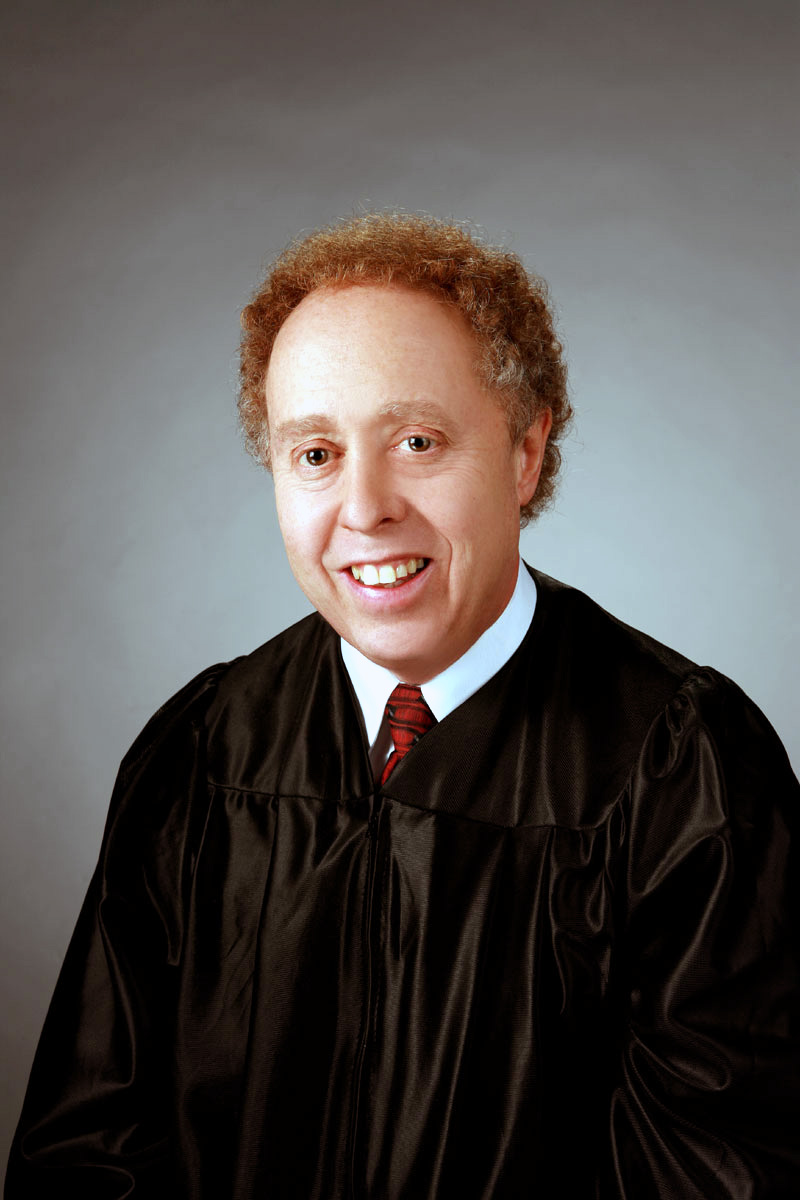
Judge Mark Belinky
 Photo
Photo
Mahoning County Commissioner John McNally IV
 Photo
Photo
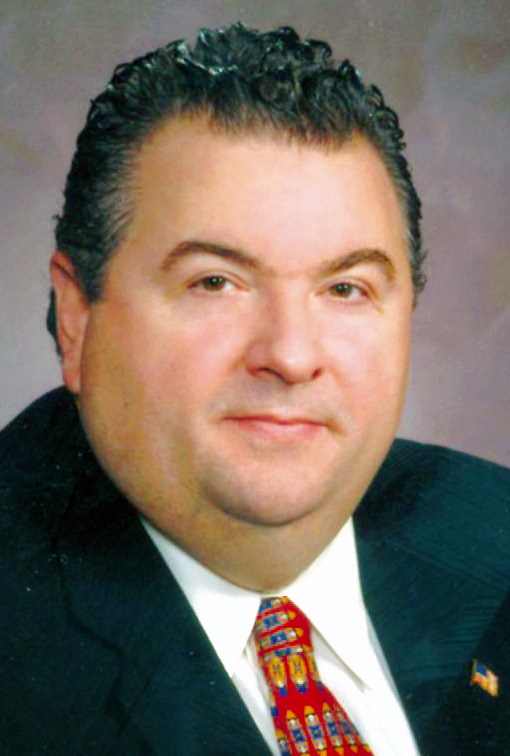
Mahoning County Commissioner Anthony Traficanti
The probate court can’t pay its bills on time or properly train magistrates, the judge says.
YOUNGSTOWN — Saying his court is underfunded, the Mahoning County Probate Court judge has figuratively slammed the gavel on the county commissioners and demanded a $915,715 court operating budget for this year.
Judge Mark Belinky made the demand in a judgment entry, saying his court submitted its budget request last October, and the commissioners failed to conduct the legally required hearing on his request.
This year’s demand is for substantially more money than the $762,859 the probate court spent in 2008.
In most years, the county commissioners conduct budget hearings for each county department in December as they prepare the following year’s budget. Because of uncertain revenues this year, however, the commissioners adopted only a first-quarter temporary budget totalling $16,117,448 and did not conduct the usual December budget hearings.
By law, the commissioners must adopt a full-year budget before the end of this month.
Anthony T. Traficanti, commissioners chairman, said the board will conduct a public budget hearing for the probate court; and Judge Belinky’s executive assistant, Luann James, said the meeting would be this week. James said the judge would not comment on the judgment entry, why he issued it, and what might happen if the commissioners don’t comply.
“Before we even talk, he throws a judgment entry ... I don’t understand what his problem is,” Traficanti said. “I’m trying to stop layoffs here, and we need the courts to work with us.”
“We want to talk to all the courts to make sure that they’re aware of the budget constraints of Mahoning County right now,” said Commissioner John A. McNally IV.
As for what would happen if the commissioners don’t fully grant Judge Belinky’s demand, Traficanti said: “It’s zero sum game. If he would sue the commissioners, nobody wins in this.”
Except for last December, Traficanti said the commissioners have had December budget hearings for all county departments every year since he took office in 2005. “Because we put out a temporary budget, we figured it wasn’t necessary,” to hold the December hearings in 2008, Traficanti said.
In his order, Judge Belinky said he “has inherent power to order funding that is reasonable and necessary to the court’s administration of its business,” and the commissioners must provide such funding unless they “can establish that the court abused its discretion.”
The Ohio Supreme Court has consistently ruled that county commissioners must provide probate courts with funding deemed necessary by the probate judge, according to Judge Belinky’s order.
The probate court, which had 21 employees in 2005, had 16 when Judge Belinky took office in December 2007. These numbers include the judge.
The decrease in staff “resulted in an unrealistic workload for the remaining employees,” Judge Belinky said in his order.
Therefore, Judge Belinky noted that he hired two new employees, one as a clerk, and the other as an assistant investigator, who will also perform clerical duties.
The court “must be adequately funded to address the nearly 4,500 new and continuing cases it handles annually,” the judge said.
Judge Belinky noted also that his court’s share of the county’s general fund has fallen steadily from 1.5 percent of spending in 2006 to 1.2 percent in 2007 and 1.18 percent in 2008.
General fund spending was $67.5 million last year; and, at best, this year’s general fund revenues are projected to be just below $63 million this year, according to George J. Tablack, county administrator and budget director.
Because of insufficient allocations from the county’s general fund, the probate court has been forced to use its special funds, such as its indigent guardianship fund, to meet its basic operating expenses, the judge said.
Also because of inadequate funding, the court cannot timely pay its equipment maintenance bills, and its magistrates cannot attend mandatory continuing legal education seminars, the judge said.
“The court is mindful of the downturn in the national economy. The impact on the local economy is less certain,” Judge Belinky said in his judgment entry.
Judge Belinky also said he takes “judicial notice” of “sizable pay raises” and “substantial increases in spending,” that occurred after one of the two county sales taxes became continuous in 2007.
Tablack has recently said all county departments must share in sacrifices and that adoption of spending reductions already adopted by the sheriff’s department would mean rollback of his pay increase, which elevated his annual salary from $95,000 to $103,809, and other raises granted to key employees.
Traficanti said he is taking a 10 percent pay cut and will rebate 10 percent of his $76,765 annual salary to the county.
Judge Belinky, whose salary is $121,350 annually, said in his judgment entry that his court has “submitted reasonable budget requests and granted modest pay raises in recent years, even requiring a health insurance co-pay of its employees for the first time in 2008, which reduced the requested budget.”
Only $14,508 of the judge’s salary comes from the county. The rest is paid by the state.
Probate court employees received 3-percent pay raises in January 2008 and January 2009.
Total monthly health-care premiums for probate court employees are $562 for the single plan, $1,116 for a couple, $1,034 for the employee and children and $1,192 for the family plan. Employees contribute $26.94 a month for single coverage and $61.04 a month for all the other plans.
Judge Belinky is not the only local judge to recently make financial demands on local government officials.
Youngstown’s municipal judges are asking city council to appropriate $25,000 so that the court could hire a lawyer to sue the city to provide millions of dollars to build new court facilities. City council declined.
milliken@vindy.com