 43
43

Council slows mayor’s drive to cut judge
 Photo
Photo
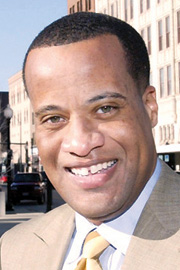
Youngstown Mayor Jay Williams
A bill to reduce the number of Youngstown judges could be introduced soon in the Legislature.
YOUNGSTOWN — City council postponed a vote on a resolution urging the state Legislature to pass a law eliminating one of the city’s three municipal court judges.
Council members said Wednesday that a decision should wait until a meeting takes place with all interested parties overseen by Chief Justice Thomas J. Moyer of the Ohio Supreme Court.
“We want to hear both sides and see if it’s worth doing to save the city money,” said Councilman Jamael Tito Brown, D-3rd, finance committee chairman.
No date has been set, but the chief justice has said he would have such a meeting at the request of Mayor Jay Williams. The mayor said the meeting should take place soon.
Elizabeth A. Kobly, the court’s presiding and administrative judge, said she was shocked that council would even consider the resolution, sponsored by Mayor Jay Williams.
The mayor said he doesn’t oppose a postponement on council’s decision, but added the wait shouldn’t be indefinite.
Council shouldn’t “just say, ‘It’s a situation that is too uncomfortable to discuss,’” Williams said.
Councilwoman Carol Rimedio-Righetti, D-4th, said, “We need time to have questions answered. This is a big issue.”
Under Williams’ proposal, the elimination would occur Dec. 31, 2011, the last day of Municipal Court Judge Robert P. Milich’s current term.
Council’s decision to wait may be meaningless, however.
The elimination requires approval by the state Legislature, and state Rep. Robert F. Hagan of Youngstown, D-60th, said legislation is being prepared and he could introduce it in the Ohio House shortly.
Williams previously had asked Hagan to introduce such a bill, and said Wednesday that he wouldn’t tell the legislator to wait.
In a telephone interview, Hagan said he’d first talk to Williams before submitting the bill.
The mayor says the elimination would save money for the financially strapped city, and with Youngstown’s declining population, there’s no need for three municipal court judges.
Williams also points to data showing Youngstown judges handle many fewer new filings than the state average.
Judge Kobly and Judge Robert A. Douglas Jr., who both attended the council meeting, said the savings would be minimal, and a comparison to other courts isn’t fair because it’s just a listing of case load per judge.
That means a violent crime is treated the same on the list as a speeding ticket, the judges said.
The data, provided by each court to the Supreme Court, is valid, Williams said.
“If you can’t compare courts, why does the Ohio Supreme Court have the data?” he said.
Also, council voted 6-1 to authorize the board of control to allow the court to use up to $25,000 to sue the city.
The money would come from a special fund established by the judges to build a new court facility.
The judges want the money, used to pay legal fees related to the lawsuit to compel the city to provide an adequate court facility, to come from the city’s general fund.
Without the signature of at least one of the judges, the money can’t be spent from the special fund.
The Supreme Court will decide where the money comes from for the judges’ legal fees as part of the case pending in front of it, Judge Kobly and Williams said.
skolnick@vindy.com