 43
43

Youngstown has been seen as a ‘throwaway city,’ a journalist said.
Assignment Youngstown
 Video
Video
Assignment Youngstown Public Panel Discussion
 Video
Video
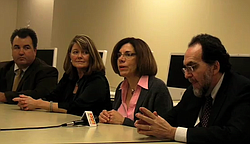
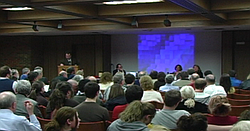
Connie Schultz, Plain Dealer, Jonathan Kaufman, The Wall Street Journal and Marilyn Geewax from NPR visited Youngstown State University, Tuesday, Feb. 10, to talk to the public about reporting on Youngstown and its people. The Vindicator editor Todd Franko moderated. The discussion was co-sponsored with the Journalism Program and The Vindicator.
By Harold Gwin
Youngstown has been seen as a ‘throwaway city,’ a journalist said.
YOUNGSTOWN — If Youngstown wants to change what it perceives to be a negative national image, it’s up to the people here to tell the story of rebirth.
That’s the bottom-line advice from three journalists presenting a panel discussion of how the national media has been portraying Youngstown, particularly in national elections.
There’s been too much talk about sad endings, said Connie Schultz, a columnist for The Plain Dealer, referring to steel mills and other factory closings.
“Take back your town,” she said. It’s time to focus on a new beginning, she advised a crowd of about 150 Youngstown State University college students, staff and faculty and others who turned out Tuesday for the 90-minute session at YSU’s Kilcawley Center.
The event was sponsored by YSU’s Center for Working-Class Studies, The Vindicator, the YSU journalism program, the Ford Foundation and The New York Times.
The mills closing is “such a compelling story,” said Marilyn Geewax, a Campbell native and now a senior business editor with National Public Radio.
But that’s only part of the Youngstown story, she said, noting there are positive developments here, citing the city’s decision to tear down dilapidated structures and rethink its urban space to fit a shrinking population as one example and the development of a business incubator as another.
There’s been a lot of willingness to see Youngstown as “a throwaway city,” Geewax said. There was so little effort put forth by anyone outside the community to save Youngstown when the mills closed. No one rushed in with job retraining or other programs to help, she recalled.
People in national newsrooms want to hear the complexity of a story, said Jonathan Kaufman, political reporter for The Wall Street Journal.
National reporters may come in chasing a particular theme for their story and may choose to write only about certain truths in a community, which can sometimes be seen as harsh by those being written about, Kaufman said.
Stereotypes are easy to find in any community. Good reporters need to take the time to get to the complexity of the issue, to find people who will speak to them honestly, he said.
People have found Youngstown interesting because, “You’re still standing,” Schultz said. “You have hope when you have no reason to.”
All of the stories here “are really the stories of America. Look how many times you’ve picked yourself up,” she said.
Stories of mob history and corrupt politicians here aren’t funny and shouldn’t be accepted as being representative of the community, Schultz said.
One thing Youngstown must do is end its tolerance of crime, Geewax said, referring to what she said has been the election of corrupt officials in the past. She’ll write about the good and wonderful people here, but the tolerance of crime is something she won’t shy away from, even if it hurts people’s feelings, she said, adding that the city needs to get rid of that tolerance if it hopes to move forward as a business community.
The words of the journalists rang true for audience member Mike Gallagher of Austintown, a Packard employee who grew up in Youngstown. He said he missed work to hear the panel discussion.
“We need to send out a better message that we won’t accept business as usual. It’s up to us,” said Gallagher.
gwin@vindy.com