 43
43

Strickland asks Ohioans to pay more fees
 Photo
Photo
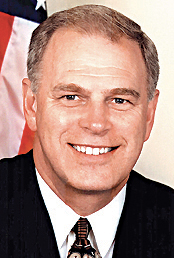
Ohio Governor Ted Strickland (D-Lisbon)
The budget proposal would empty the state’s rainy-day fund in two years.
COLUMBUS (AP) — Ohioans will pay more to farm, drive, enjoy the outdoors, keep the environment clean and do business under Gov. Ted Strickland’s proposed budget released Monday.
Strickland plans to balance his two-year $55 billion spending plan with help from increases in 120 state fees.
Money raised through fee increases will help fund some of Strickland’s priority investments: $925 million in new dollars for public schools and the first steps toward construction of a high-speed railroad traversing the state.
He also calls for maintaining a freeze on college tuition and an increase in government health insurance for children in low-income families.
Some of the agencies affected by fee increases include the Department of Natural Resources, the Agriculture Department and the Department of Transportation. The increases are expected to raise $236 million. The Health Department has proposed a number of fee increases, including license fees for marinas and campgrounds.
Strickland’s budget also relies heavily on $3.4 billion in anticipated funding from the federal stimulus package being debated in Congress this week. State Budget Director Pari Sabety said the budget’s ambitious goals will be impossible without that cash.
She predicted cuts in classroom instruction, social services and health care if the money isn’t approved. She defended the state’s use of stimulus money to cover 5.5 percent of general spending, saying the idea of the stimulus is to keep spiraling state budgets from further contributing to the national fiscal crisis.
“We are engines of the recovering economy,” Sabety said.
Strickland’s budget does not raise taxes, instead calling for cutting the budgets of 33 state agencies and flat-funding six others, and reducing many existing government programs, some by as much as 20 percent.
The budget is balanced in part through proposed pay cuts of up to 6 percent for all state employees — including Strickland and other Cabinet members — and asks employees to pay 10 percent of their vision and dental coverage and life insurance. Negotiations with unionized state workers are under way.
The spending blueprint also imposes a new fee on hospitals and cuts reimbursement rates to nursing homes that treat patients insured through the state-federal Medicaid program.
The plan’s top transportation priority is to begin work restoring passenger rail service between Cincinnati, Columbus and Cleveland, with the eventual goal of making the service high speed.
To raise new transportation dollars, Strickland proposes allowing tolls on newly constructed highways and letting police stop drivers for not wearing their seat belts. Ohio police now can ticket seat belt violators only if drivers are first pulled over for another traffic violation. The change, which lawmakers would have to approve, would give Ohio an estimated $26 million in one-time federal funding.
The budget proposal also imposes another tuition freeze at Ohio’s public universities next year, with an increase in 2011 not expected to exceed 3.5 percent. Tuitions were frozen in the current two-year budget.
The federal stimulus money includes $42 million in welfare dollars and $821 million in education funding. The budget also empties the state’s rainy day fund of $948 million in 2011.
The budget adds tax credits to lure filmmakers to Ohio and to help cities boost their downtowns.
Republican lawmakers have already begun criticizing Strickland for using the federal money to balance the budget instead of making further cuts. The budget as proposed grows by estimated 4.4 percent. Lawmakers in the Republican-controlled Senate and Democratic-controlled House will review Strickland’s proposal and over the next several months put together a budget that will take effect in July.