 43
43

Woodstock: 3 Canfield pals, a VW and a ‘magical’ memory to cherish
 Photo
Photo
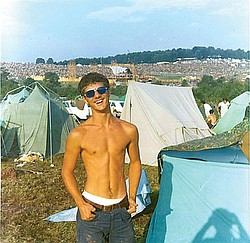
PACEC, MAN: Jim McCreary was a 20-year-old college student when this picture of him was taken at Woodstock in Bethel, New York, in 1969. The Canfield native said the festival was a magical moment.
 Photo
Photo
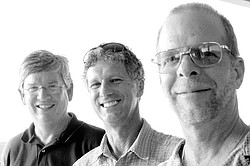
THEY WERE THERE: From left, Bruce Neff of Canfield, Jim McCreary, a Canfield native now living in Bonita Springs, Fla, and Jeff Enterline, a Canfield Native now living in Austintown, reminisce about Woodstock. The trio attended the concert bash 40 years ago when they were 20 years old.
Woodstock.
The word stirs the imagination.
More than a mud-splashed music festival, Woodstock has come to stand for an idealistic philosophy of cooperation and peace. About 400,000 young people came to a farm in upstate New York on Aug. 15-18, 1969, for the event. It was the height of the hippie era, a time of mind-altering drugs, changing values and hope for the future.
Forty years later, Woodstock’s effect on society has been negligible. But its spirit lives on, especially in the memories of those who were there.
In the summer of ’69, Jeff Enterline, Jim McCreary and Bruce Neff were 20-year-old best buddies, graduates of Canfield High School who had known one another most of their lives.
Enterline was in the service and was back in town on leave for a few days, and McCreary and Neff were home from college. They heard about this big rock concert, so they piled into Neff’s Volkswagen Beetle and headed off.
“We heard the Beatles and Dylan would be there,” said Neff. Neither one was.
“We wanted to go, but we didn’t have tickets,” said McCreary, a retired San Francisco firefighter who now lives in Bonita Springs, Fla. “We figured we’d go early and get jobs working there and get in that way. We would help park cars or whatever was needed, like we had done at the Canfield Fair.”
The trio got there by Wednesday, despite the fact that Interstate 80 hadn’t been completed and they had to take back roads to reach Max Yasgur’s farm near Bethel, N.Y.
“It wasn’t too crowded when we got there,” said McCreary. “We arrived on a Wednesday, parked the car and pitched our tent.”
Then the crowds started pouring in.
Although 400,000 people attended Woodstock, only 186,000 actually had tickets. The rest just trampled down the fences and walked in. Before long, the overwhelmed ticket-takers simply gave up and left.
“It was sort of out of control, but not in a bad way,” said McCreary. “We realized we wouldn’t even need tickets.”
They also began to fathom the magnitude of the event.
“We went to town to get three cases of beer, but when we got back, we realized we couldn’t move our car again,” said Enterline, who is a postal worker in Youngstown. Their VW was parked several miles from the entrance, and the cars just kept on coming.
The exposure to the hippie culture was an eye-opener for the three men. “Beer was our drug of choice,” said McCreary. “We didn’t even know what marijuana was.”
But they found out quickly.
“There was no water, nothing to drink, and people were always trying to trade us pot for beer,” said McCreary.
The three Canfielders were rock ’n’ roll fans and came for the music, which Enterline said was awesome.
“The first night, the music went all night,” said Neff. “I remember a lot of people in the crowd had fallen asleep, but then at 3 a.m., Sly and the Family Stone came on and everybody woke up and got up and danced.”
Neff is the owner of Multi-Media Farms, a video production company in Canfield.
For McCreary, the Jefferson Airplane’s set was the most memorable.
“[Lead singer] Grace Slick came on in the morning, the sky was just lighting up and it was, like, wow, that went all night.”
By Sunday, the last day, the trio was ready to leave. The promoters had woefully underestimated the turnout, and the lack of sanitation was taking its toll. “We left in the morning because the stench was so bad it was hard to tolerate,” said McCreary. “It was survival at that point.”
“We missed Jimi Hendrix,” said Neff. The legendary guitarist performed his famed version of “The Star Spangled Banner” that day.
If Woodstock didn’t exactly turn out to be a watershed moment, ushering in an era of peace and love, it was — at least for one long weekend — an example of how people with like minds can overcome anything.
That element has stayed with the three men all these years.
“I was amazed at how large it was and yet with so few hassles,” said Neff. “There was no yelling, no anger.”
McCreary agreed.
“If you bumped into someone, it was like, ‘Sorry, are you OK?’ Very different than bumping into someone at say, the Canfield Fair, where it could get tense.”
That mellowness was not revived at the Woodstock reunion concerts in 1994 and 1999, which were marked by commercialism and violence.
McCreary got to the heart of the “we’re in this together” spirit that made the original so special.
“Today, lawyers and corporations are collecting data on you at all times, and everything is overly controlled. It takes all the fun out of it,” he said. “At Woodstock, there was none of that, and yet it worked so well. It showed that if you leave people alone, they can take care of themselves.”
Although the omnipresent drug use was a negative, Enterline said, “It was a joy to be a part of Woodstock.”
McCreary noted that Woodstock didn’t change the world, but it was “a magical moment. Who knows why it happened like that.” He suggested that it was love of the music that kept the throng on the same page.
Enterline, who served in Vietnam, admitted that Woodstock changed his political views. “I didn’t know what my position was on Vietnam at the time,” he said. “Woodstock politicized me, and I became very anti-war.”
Enterline and Neff both turned up in the 1970 documentary “Woodstock.” They were visible in a scene in which a group of people were bathing in a pond. Neither had any idea that they were in the film until they saw it.
“I was at the State Theater [in downtown Youngstown] watching it with my girlfriend, and I saw myself and screamed, ‘There I am!’” said Neff. “Everybody in the theater started laughing.”
None of the three has returned to Woodstock, but they still feel a part of it.
“There is a brotherhood,” said McCreary. “If you meet someone today and you find out you were both at Woodstock, there is a connection.”