 43
43

‘Ugly, bothersome’ utility poles will mar beauty of $34M YSU business building, leader laments
 Photo
Photo
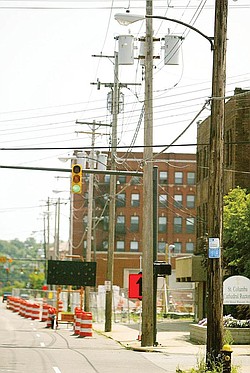
UGLY LINEUP: Youngstown State University wants Ohio Edison to remove these wooden utility poles from West Rayen Avenue and bury the wires where the university is building its $34.3 million business school, but the electric utility is balking at undertaking the task at the utility’s expense.
By Harold Gwin
If YSU wants the lines moved, it will have to pay for it, a utility spokesman said.
YOUNGSTOWN — Youngstown State University is spending about $34 million to put up a new building between Rayen Avenue and Wood Street, but the modern-designed structure will be surrounded on three sides by some old technology — wooden utility poles.
Some think it would give the entire area around the new Williamson College of Business Administration building a cleaner, more modern look if the utility lines on those poles were put underground and the poles removed.
“It’s really something that’s bothersome to us,” said John Hyden, YSU’s executive director of facilities.
The university and the city are making some big investments in that area, “but we’re stuck with those ugly poles,” he said. “This is probably the right time to take care of it.”
Hyden said the university has addressed the issue with Ohio Edison, suggesting that the utility company pick up the tab for putting its utility lines along Rayen Avenue and Wood Street in the business school area underground.
Ohio Edison isn’t interested, at least not in doing the work at its own expense.
The general practice is that, if a customer wants a line relocated or placed underground, the customer pays for the work, said Mark Durbin, Ohio Edison spokesman.
“Everyone talks about aesthetics, but there’s a major expense involved,” Durbin said.
YSU broke ground on the 110,000-square-foot Williamson building in March, and it is to be ready for occupancy by fall 2010.
There has been some effort to persuade Ohio Edison to move the overhead utility lines along the north and south sides of the project (Rayen and Wood just west of Phelps Street) “but no positive response,” Hyden said. Phelps Street would come later, he said.
He acknowledged that it would likely be an expensive proposition, and that Ohio Edison would have to make a sizable engineering investment just to determine if it is feasible and what it would cost.
Durbin said no such estimate has been prepared at this point.
Moving lines is very expensive, and the cost would be spread among the rest of the utility company’s customers if Ohio Edison picked up the tab, he said. He added that would be a move some customers might not appreciate.
There are other factors to be considered, Durbin said.
Lines other than electrical lines may be attached to those poles, and putting them underground may not be possible, he said.
Further, maintenance and repair is much easier when utilities are overhead than when they are buried in the ground, he said.
The lines along Wood Street include a main feeder line that the utility company would probably never want to put underground, Durbin added.
Ohio Edison could look at rerouting some lines around the Williamson site, but, again, the university would have to pay for any changes, he said.
If the poles were taken away, probably no one would even notice they were gone, but they will be noticeable if they remain, Hyden said, adding that the university will likely take the issue up again with Ohio Edison as the steel begins to rise on the construction project.
If the university had a good estimate on the cost of putting the utility lines underground, it might look at finding the money to do the job, Hyden suggested.
gwin@vindy.com