 43
43

Court cuts video hearings
 Video
Video
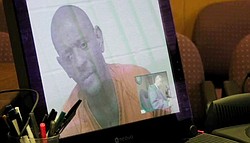
New Ohio Supreme Court rules complicate using video arraignments.
YOUNGSTOWN — Video arraignments aren’t likely to make a return engagement anytime soon in Mahoning County Common Pleas Court.
That’s because of the combination of newly published changes in Ohio Supreme Court rules and opposition from the three Mahoning judges in charge of arraignments.
Judge R. Scott Krichbaum, whose four months of overseeing arraignments ends April 30, said due process for defendants charged with serious crimes has improved, and weekly arraignment sessions have been shortened since he discontinued video arraignments.
Citing newly amended rules of criminal procedure, Judge Krichbaum sent letters to Sheriff Randall A. Wellington and to the Mahoning County Bar Association on Jan. 7, saying all defendants in criminal cases and their lawyers must appear in person for arraignment in his court.
The rule amendments, which took effect last year, say defendants must be arraigned in person in court unless they waive that right, either in writing or on the court record, and that they must be permitted to speak privately with their lawyers.
Although those requirements were only recently spelled out in the rules, they have always existed under the U.S. Constitution and Ohio law, Judge Krichbaum said.
“Those are basic due process rights that are guaranteed” to all defendants in criminal cases, and those defendants are “entitled to be present at every stage of the proceedings,” the judge said.
If they are asked whether they want to waive their presence in court for arraignment, most defendants likely will decline to waive that right, the judge said.
Judge John M. Durkin said he doesn’t plan to use the video when his four months in charge of arraignments begins on May 1. That’s because he doesn’t believe the current setup for video arraignments allows the required opportunity for confidential attorney-client communication.
“I don’t believe there are adequate facilities now at the justice center [jail] to accommodate and meet the requirements of the rule,” Judge Durkin said.
Judge Lou A. D’Apolito, who will oversee arraignments during the final four months of this year, said he won’t do video arraignments.
“It’s a critical stage, and I think that I like to be able to talk with the defendant face-to-face and make sure that he or she understands what’s going on,” Judge D’Apolito said.
In common pleas court, the arraignment is the first court appearance made by a defendant in a criminal case after he or she has been indicted by the grand jury. The defendant enters a plea; the judge or magistrate sets bond; and a court assignment officer announces which courtroom the case is assigned to and sets pre-trial hearing and trial dates. The court also appoints a defense lawyer at government expense if the defendant can’t afford to hire one.
“A felony is a case for which someone can be put in the penitentiary. There’s a heightened degree of due process the more serious the case becomes,” Judge Krichbaum said.
Felonies are tried in the common pleas court.
Judge Krichbaum said video arraignments are “much more palatable” to him in municipal or county courts, which try the less serious misdemeanor cases.
Twenty to 40 people are arraigned in a typical weekly arraignment session in Judge Krichbaum’s court, five to 10 of them normally being county jail inmates, he said.
During several years when Magistrate Timothy G. Welsh did video arraignments, the entire video and in-person arraignment process would typically take 90 minutes to two hours, Judge Krichbaum said. Since the discontinuance of video arraignments, no arraignment sessions have lasted more than an hour, he said.
“Both from a legal standpoint and from a logistics standpoint, having the defendants present in the courtroom is the appropriate way to go,” Welsh said.
The magistrate cited technical difficulties that sometimes occur with the equipment and the need to recess the court briefly while the video equipment is being moved into and out of the courtroom.
Video arraignment may be more efficient than transporting inmates, but “efficiency has to give way to due process,” said defense lawyer Ron Knickerbocker, who agrees with the discontinuance of video arraignments.
“I think it’s a good idea to have the defendants over here and give counsel the opportunity to talk with them in person,” Knickerbocker said.
“It saves the cost of transporting prisoners back and forth,” said county Prosecutor Paul J. Gains. But he added: “You’ve still got to have court personnel there and you’ve still got to have a prosecutor” in the courtroom.
The sheriff’s department can handle the extra inmate transports needed to arraign all inmates in-person in common pleas court with existing deputies at no additional cost, Wellington said.
Judge Krichbaum’s new policy has caused “absolutely no inconvenience whatsoever,” the sheriff said.
Judge Krichbaum noted that deputy sheriffs transport about 30 county jail inmates to the courthouse daily for proceedings other than arraignments.
Despite the discontinuance of video arraignments at Mahoning County Common Pleas Court, Judge Robert Milich of Youngstown Municipal Court said he’d like to continue them while adhering to Ohio Supreme Court rules concerning both arraignment procedures and court security.
All three municipal judges regularly conduct video arraignments, which have been done there for about a decade.
“Overall, it’s just more cost-effective. It’s more secure ... It just is more efficient to do it on video,” Judge Milich said.
Before the municipal court adopted video arraignment, security breaches would sometimes occur when inmates came to court, he said. For example, inmates would receive items from family members, and inmates would try to intimidate victims and witnesses they would pass closely in the court’s cramped quarters, the judge recalled.
Monday is the municipal court’s busiest arraignment day because all those cited or arrested over the weekend are arraigned. On a typical Monday, the court will have 25 to 30 in-person traffic arraignments; 12 in-person criminal arraignments and 25 to 30 video arraignments in three to 31‚Ñ2 hours, Judge Milich said. Fewer arraignments generally occur on the other days of the week.
The Mahoning County Area Courts disconnected the video feeds from the county jail to the court locations in Boardman, Canfield, Austintown and Sebring about five years ago, said Colleen Ingram, court administrator.
Judge Joseph Houser conducted video arraignments in Boardman Court in 2001 and 2002, Ingram said. “It was actually kind of cumbersome,” she said, noting that a bailiff had to take paperwork to the jail.
Due to budget limitations, the court didn’t replace a bailiff who resigned, and therefore it no longer had enough bailiffs to send one to the jail, she noted.
One day this month, 24 prisoners had to be transported from county jail to Boardman Court, only a handful of them for arraignments, and the vast majority for pre-trial and preliminary hearings, Ingram said. When so many inmates need to be transported for other reasons, it makes sense to also transport the few needing to be arraigned, she explained.
“It’s more efficient, and you just know they understand and they’ve been advised,” of their rights, Ingram said of in-person arraignments.
milliken@vindy.com