 43
43

Judges want a new courthouse and the ability to hire more employees.
 Photo
Photo
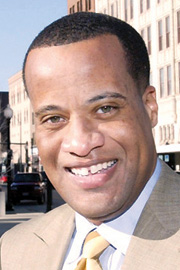
Youngstown Mayor Jay Williams
Judges want a new courthouse and the ability to hire more employees.
YOUNGSTOWN —¬†In the looming budget battle, the lines between city administrators and judges are clear.
The city’s judicial branch is overstaffed and inefficient compared with other municipal courts in the state, city administrators say.
And, they charge, the refusal by the judges to change how they operate is causing a drain on the city’s already ailing finances.
The judges see the situation quite differently.
Court employees are overworked and additional help is desperately needed, judges say. And the judicial branch has kept its spending in check, unlike other aspects of the city budget.
Any resolution between the two views might well emanate from a courtroom.
The administration is bringing this issue to the forefront, Mayor Jay Williams said, because of the judges’ request to create new jobs while the city is reducing its payroll. Also, the judges decided to hire an attorney — using city money — as they consider legal action requiring the construction of a new, $10 million-plus court facility.
“I won’t bankrupt the city to build a new court,” Williams said. “There’s a resistance to look at this [budget problem] in its totality on the court’s part. City government has changed and downsized. I asked if the court was willing to change. I perceived an unwillingness to look at anything by the judges.”
Instead of a new facility, the city administration is considering changes to the court system, including reducing the number of municipal court judges from three to two as well as consolidating the court with others in Mahoning County.
In comparison to the overall cost of city operations since 2005, the court spent less money and brought in more revenue on a percentage basis.
“Unless council and the mayor can show that what we need is unreasonable, they have to provide it,” said Robert A. Douglas Jr., Youngstown Municipal Court’s presiding and administrative judge. “We have to be able to run the court. We don’t manage the city’s budget.”
If the city is having budget problems — its general fund could be $6 million in the hole by the end of next year — it’s the fault of the administration and not the judges, Judge Douglas said.
That view is not shared by Anthony J. Farris, deputy law director, who is spearheading the city administration’s efforts to examine judicial operations.
“There’s no recognition by the court to stop spending so lavishly and operating so inefficiently,” said Farris. “... Instead of expanding the facility and number of employees, we should look at reducing costs and reducing employees.”
Data submitted to the Ohio Supreme Court by municipal courts shows Youngstown’s judges handle about half as many new filings than the state average last year. Youngstown’s average was 6,872 per judge compared to the statewide average of 12,446 per judge.
Farris further compared Youngstown’s court system to Elyria, which has a comparable caseload, but gets the work done with two judges.
Elyria spent $2.8 million on its municipal court system last year compared to $4 million in Youngstown. Elyria received $1.7 million in revenue from fines and court costs compared to $750,000 for Youngstown.
Also, Elyria operates its court system with 43 employees compared with 58 full-time workers in Youngstown.
“It costs us millions more than other courts,” Farris said. The judges are “inefficient as far as expenses.”
When asked about the effectiveness of his court, Judge Douglas said: “I won’t get into a tit for tat. I don’t feel a need to defend the staff numbers and operation of the courts.”
While Williams said he has a great deal of respect for the judges and the separation of power, the court system, like the other branches of government, has an obligation to be efficient and cost-effective.
“When you compare apples to apples [to other courts, particularly Elyria], there are judges doing more work at a significantly lower cost,” he said. “We’re obligated to see why other cities do things at less expense and get more cases done.”
Farris suggests one way to save money is to reduce the number of municipal court judges from three to two. That would force the two remaining judges to pick up the pace on handling cases, he said.
Eliminating one judge is a subject that’s been discussed for decades, said Judge Douglas, who added that he “would have no resistance to whatever is done” with the number of judges.
As for having too many court employees, Judge Douglas said that’s just not the case.
Many court employees are doing the work of two or three people and additional hires are essential, he said.
The judges want to add two secretary positions to the two they now have at an annual starting salary between $38,872.60 and $46,056.60. The judges also want to hire four part-time employees who would fill in for full-timers when the latter are not at work. The hourly salary for those part-timers would be $17.68 to $24.50.
The judges had requested city council approve the job creation legislation at a meeting last month, but it was deferred because the proposal didn’t initially include salaries. Council is expected to consider the proposal sometime in the near future.
Judge Douglas said he’s “taken aback by this barrage” of criticism by the administration against the judicial branch.
The judges have long complained about court facilities located on the second floor of city hall at 26 S. Phelps St. There isn’t enough space and there are safety and security issues, the judges say.
Safety and security improvements have been made to the court facilities, but the city can’t afford a new courthouse that would cost at least $10 million, Williams said.
The judges hired an attorney, using city money, to possibly take legal action requiring the construction of a new court facility on the site of the former Masters building complex on West Federal Street near Vindicator Square.
“We want to find out what we can do next,” Judge Douglas said.
The two sides are open to mediation, but none has occurred.
There’s been talk for more than a decade about the condition of the court without a solution.
The money for a new courthouse was available three years ago when the city borrowed $11.9 million to pay its portion of the construction of the Chevrolet Centre, Judge Douglas said.
“I can’t address that because I wasn’t mayor three years ago,” Williams said. “But even if we built a new courthouse, you’ve got to operate it.”
The city doesn’t have the money to build a courthouse, so spending the cash to operate it would be out of the question, Williams said.
skolnick@vindy.com