 43
43

Tate lawyer gets OK to hire expert
 Photo
Photo
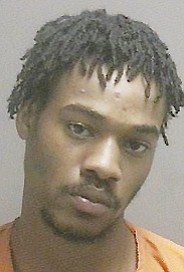
Terrance Tate, of Youngstown.
By PETER H. MILLIKEN
VINDICATOR STAFF WRITER
YOUNGSTOWN — The judge in the death penalty murder case of Terrance Tate ruled the defense can spend up to $15,000 in Mahoning County funds to hire an expert to testify as to whether the state’s execution method is an unconstitutional cruel and unusual punishment.
Tate is charged with aggravated murder in the fatal beating of Javonte Covington on his first birthday in April 2006.
Judge R. Scott Krichbaum of Common Pleas Court made the ruling Tuesday. But he did overrule a defense motion to conduct a hearing before Tate’s trial concerning the constitutionality of Ohio’s lethal injection method of execution.
Judge Krichbaum declined to schedule that pre-trial hearing because he said the lethal injection issue shouldn’t be considered before a jury determines Tate’s guilt or innocence, or decides whether to recommend a death sentence.
“It is not ripe for resolution at this time,” Judge Krichbaum said of the constitutional question.
In making his ruling, Judge Krichbaum agreed with the argument of Martin P. Desmond, assistant county prosecutor, who said the constitutionality argument is premature before the trial occurs.
Defense lawyer John B. Juhasz said the defense wishes to hire Dr. Mark Heath, a New York City anesthesiologist, as its expert. Juhasz said after court that Dr. Heath could testify on the issue if a hearing on the matter is held at a later date.
Dr. Heath is to testify in a forthcoming hearing on the constitutionality of Ohio’s lethal injection execution method before Judge John M. Durkin of Mahoning County Common Pleas Court in the pending death penalty murder cases of Antonio Jackson and Antwon Lanier.
Some of Dr. Heath’s work in the Jackson and Lanier cases will overlap with his work in the Tate case, so the defense doesn’t expect to spend the full $15,000 in the Tate case, Juhasz said.
Lanier and Jackson are charged with aggravated murder in the death of Sierra Y. Slaton, whose body was found floating in McKelvey Lake on Aug. 7, 2005, shot once.
Jackson is also charged with the aggravated murder of Tahnee Jackson (no relation), who had been drowned and was found floating nude in a South Side creek on Nov. 20, 2005.
Dr. Heath testified in a hearing before Judge James Burge of Lorain County Common Pleas Court, who ruled in June that the state’s lethal injection procedure is unconstitutional because two of the three drugs it uses can cause pain.
Juhasz said a failure by the defense to assert its arguments now could preclude it from having its arguments fully considered after the trial is over.
“This is the time to raise it,” he said of the constitutionality question. “The law does favor a pre-trial resolution of this,” he added.
Judge Krichbaum made the same ruling that he wouldn’t conduct a pre-trial hearing on the constitutionality of Ohio’s lethal injection method in the case of Michael A. Davis, the 18-year-old who faces the death penalty after being accused of setting the Jan. 23 East Side house fire that killed six people.
In both the Davis case, which goes to trial Oct. 6, and the Tate case, which is tentatively set for trial Nov. 3, Judge Krichbaum said he believes U.S. and Ohio Supreme Court rulings uphold Ohio’s execution method.
If he were to declare Ohio’s lethal injection method unconstitutional before Tate’s trial, and if Tate were to go to trial and be convicted of aggravated murder without the death penalty specifications, Judge Krichbaum said Tate would likely escape the death penalty — even if an appellate court later reaffirmed the constitutionality of the state’s execution method.
Under those circumstances, it’s unlikely Tate could be retried, Judge Krichbaum observed.
“It’s very difficult for me, conceptually, to sit here and try to decide what we’re going to do with somebody when we don’t even know if he’s guilty or not guilty,” Judge Krichbaum said.
milliken@vindy.com