 43
43

Llamas, owners share the llove
- PHOTOGALLERY:
The 2008 Canfield Fair - So far, fair assistance
faring well - 3 religious services
available to fairgoers - Bidding for quality and
the 4-H - Dragons, turtles, degus!
Oh my! - Royal court
- A trip to the
fair doesn't come cheap,
fairgoers say - VIDEO:
Jane Renkenberger - VIDEO:
Fair Mom - VIDEO:
Leroy's Sausage - 50 years at fair
bring honors for 2 - Wet rides, cow
kisses and tradition - Produce makes for
fair display - 2008 Outstanding Youth
Mahoning County
Junior Fair - Canfield Fair continues
long tradition - Admission and Ride
Prices - Health officials prepare
for fair
 Photo
Photo
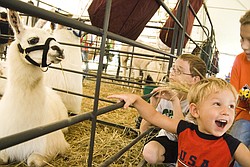
Llama time: clockwise from left, Carl Nati, 7, Ronnie Tarantino, 10, and Chase Tarantino, 3, all from Hebron, KY feed Hurricane the llama at the Canfield Fair, Saturday, August 30, 2008. Daniel C. Britt.
 Photo
Photo
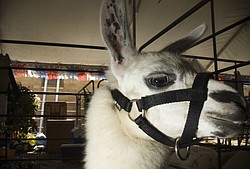
It is rumored that Juno the llama can read human minds. Canfield Fair, Saturday, August 30, 2008. Daniel C. Britt.
 Photo
Photo
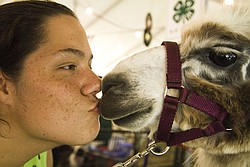
Danielle George, 18, of Canfield kisses her llama, Mojo, at the Canfield Fair Saturday, August 30, 2008. Affection makes llamas more personable, George said. Daniel C. Britt.
By ASHLEY LUTHERN
Llamas have been featured at the fair for 15 years.
CANFIELD — If there were a Canfield Fair 5,000 years ago, llamas would have been the largest domesticated animal on display.
Llamas and alpacas were used as pack animals and a source of food in the Western Hemisphere about 5,000 years ago, before Europeans brought horses and cattle to the “new world,” said Dr. Charlene Arendas, a veterinarian and member of the 4-H group “Llucky Llamas.”
Arendas traveled to Peru in January to observe llamas and alpacas in their native habitats.
“It was great to talk more about the history of the llamas on the trip,” she said. “We had alpaca for dinner one night, but that’s normal in Peru. They are considered food, along with guinea pigs.”
Now Arendas is sharing her knowledge at the llama tent at the Canfield Fair.
There’s a misconception that llamas are mean animals that spit and bite, she said.
Other Llucky Llamas members agree that meanness is a stereotype. Danielle George, 18, said that she has never had a problem with her llama, Mojo.
“They’re really personable and gentle,” George said. “They don’t have top teeth so they can’t even bite you.”
She added that they usually spit at other llamas, not humans.
Llamas are becoming more and more popular as 4-H projects, said Debbie Arendas, adviser for the Llucky Llamas.
“They’re good for those who want a large animal, but don’t want it to kick like a horse or are scared of something bigger,” she said.
The average llama weighs between 250 and 400 pounds and is about 5 to 6 feet in height from hooves to head. The gentle giants have been featured at the fair for 15 years.
Debbie Arendas has 47 llamas and two alpacas at her Lowellville farm, but her herd started with one llama that she and her daughter bought after a 4-H project.
“We just fell in love with him,” she said. “Llamas are so mild-mannered with such an easy temperament.”
At her farm, llamas are bred for the quality of wool, and that wool is combed daily by 4-H participants.
“We brush their wool with something similar to a dog’s brush,” said Matti Shahaden, 16, of Berlin Center.
“I like showing llamas because they’re so easy to work with, but you still need patience.”
Llamas at the Canfield Fair were shown in the costume class Saturday and will be shown again in a general exhibition today at 10:30 a.m. in Coliseum 8.