 43
43

Ohio executes killer who said he was too fat to die
 Photo
Photo
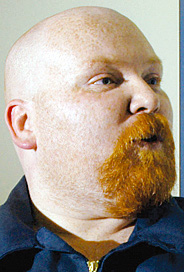
Richard Cooey
Cooey never apologized for raping and brutally slaying the two students.
LUCASVILLE, Ohio (AP) — The first inmate to die by lethal injection in Ohio in more than a year argued to the end that his obesity would make it difficult for prison staff to find suitable veins in his arms to deliver the deadly chemicals.
Double murderer Richard Cooey, who stood 5-foot-7 and weighed 267 pounds, said in numerous legal filings that his obesity made death by lethal injection inhumane. Problems finding veins on other inmates had delayed previous executions in the state.
During preparations for his execution Tuesday, Cooey shouted for one of his attorneys as prison staff tried to insert a shunt in his left arm.
There were no difficulties, said Larry Greene, a spokesman for the Southern Ohio Correctional Facility, where Cooey, who killed two University of Akron students in 1986, was put to death.
Cooey, who earlier in the day lost a final appeal with the U.S. Supreme Court, walked into the death chamber wearing gray pants and a black short-sleeve shirt and was strapped onto the gurney. He had little to say when offered the chance to make a final statement.
“For what? You [expletive] haven’t paid any attention to anything I’ve said in the last 221‚Ñ2 years; why would anyone pay any attention to anything I’ve had to say now,” Cooey said looking at the ceiling.
Six family members of one of his victims quietly watched the execution. Mary Ann Hackenberg, the mother of Dawn McCreery, who was 20 when she was killed, looked to the ceiling and let out a sigh when Cooey’s death was announced at 10:28 a.m.
Summit County Prosecutor Sherri Bevan Walsh said the family was disappointed that Cooey was vulgar and hateful to the end.
“He still would not apologize and still would not accept responsibility for what he did,” she said.
Cooey was the first inmate executed in Ohio since the end of an unofficial moratorium on executions that began last year while the U.S. Supreme Court reviewed Kentucky’s lethal injection procedure.
Before the moratorium, Ohio had one of the nation’s busiest death chambers.
Cooey’s day began with the U.S. Supreme Court turning down without comment his complaint that the state’s protocol for lethal injection could cause an agonizing and painful death. Cooey wanted the state to use a single drug rather than a three-drug combination, and asked for a stay of execution pending a hearing on that motion.
The court on Monday denied a separate appeal based on Cooey’s claim that his obesity was a bar to humane lethal injection.
Cooey was 75 pounds heavier than when he went to death row — the result of prison food and 23-hour-a-day confinement, his lawyers said.
Cooey and a co-defendant were convicted in the sexual assaults and slayings of McCreery and Wendy Offredo, 21, in September 1986. His co-defendant was 17 and was sentenced to life in prison because of his age.
The state has now executed 27 inmates since 1999, when Ohio renewed executions after more than three decades.