 43
43

Probate Judge Belinky has earned a full term
 Video
Video

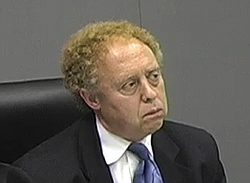
Nothing has caused us to change the opinion we expressed eight months ago of Mahoning County Probate Judge Mark Belinky’s fitness to serve on the bench. Indeed, we are even more impressed with the way he has handled the job than we were in March when The Vindicator endorsed him in the Democratic primary.
Our opinion of his 10 months in office — he was appointed by Gov. Ted Strickland to fill the vacancy created by the retirement of Judge Timothy Maloney — is shared by those who have first-hand knowledge of the work of the Probate Court.
The Mahoning County Bar Association has found him to be “highly qualified,” the only judicial candidate this year to receive such an evaluation. In addition, the Ohio Judicial College has named Belinky to its Probate Practice and Procedure Committee in recognition of the innovative changes he has made.
When he took office, he was well aware of the negative reviews Judge Maloney had received from regular practitioners of this specialized field. In his first major act, Belinky took the 80-pages of local rules that his predecessor had developed — over and above those contained in state statute — and replaced them with a 15-page document.
Delinquent cases
Next, he grabbed the 3,000 delinquent cases on the court’s docket and moved quickly to reduce the number.
As for the administration of the court, the judge, recognizing the county’s fiscal difficulties and the need for all employees to do their part, required his employees for the first time to pay a portion of their health care insurance premiums.
The probate court has become more efficient, transparent and, above all, fair.
His win in the Democratic primary over two well-known, experienced lawyers was an affirmation of his brief tenure.
Belinky faces a challenge in the Nov. 4 general election from Republican Scott Hunter, a Mahoning County Area Courts judge since 1999 and a former mayor and city councilman in Canfield.
While Hunter has the educational background and the legal experience to serve as probate judge, he falls short when his credentials are compared with Belinky’s.
We do not doubt Hunter’s sincerity in wanting to serve in this important court, but he we do take exception to his contention, made during a Vindicator editorial board interview, that it has been business as usual under Belinky.
His refusal to recognize that the probate court has undergone a major transformation in the past 10 months is not surprising — but it is unfair.
A reading of his answers to questions in the candidate’s questionnaire indicates that he makes no distinction between the court during Maloney’s tenure and what Belinky has done. Either Hunter does not know everything that has taken place since December, or does not want to admit that there has been a sea change in the court. Either is troubling.
The Vindicator endorses Belinky for a six-year term that begins Feb. 9.