 43
43

Group to help homeless in New Castle
 Photo
Photo
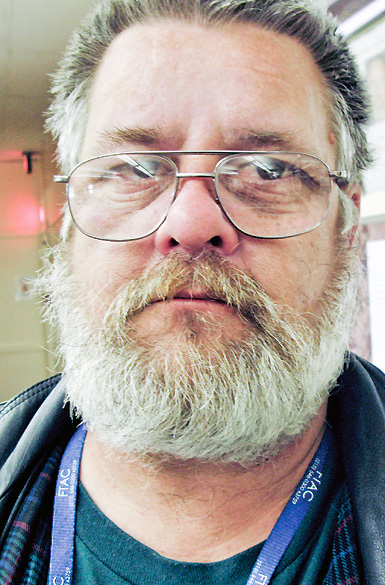
Joe Coxon
 Photo
Photo
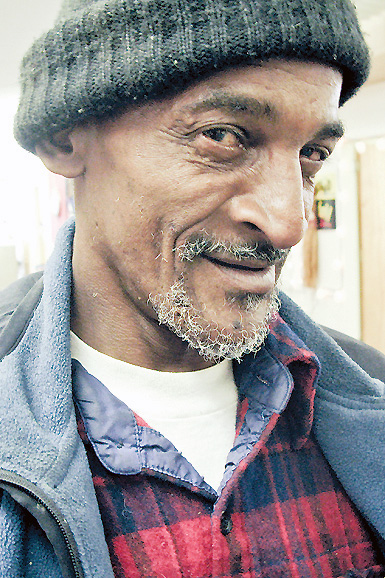
Terry Taylor
The reasons people become homeless are many.
NEW CASTLE, Pa. — It can happen after someone gets behind in rent, gets out of prison to a cold reception from family, or gets sick and can’t work.
If you analyzed every homeless person’s situation, you might discover that there are as many reasons for being homeless as there are homeless people.
Many of them end up on the streets, long or short term, and that can be a dangerous, hard life. But in New Castle, there are people who are working to make that life easier.
At Patches Place, they’ve heard a lot of reasons for homelessness. That’s because 90 of their 221 clients are either on the streets — they estimate about 60 — or going from couch to couch with whomever will take them in.
Patches Place, which opened in September 2007, is a drop-in center and an umbrella organization for three programs that serve mentally ill clients, not homeless people. But, as Sandi Hause, director of one of those programs, points out, many mentally ill people are homeless as well.
“We never thought homelessness would be part of our problem,” Hause said. “But when the cold came, the staff would leave to go home and there would be all these people out front: ‘I’m gonna sleep under a bridge,’ ‘I’m gonna sleep behind the bushes at Eat ’n Park’ ...”
So Hause, her son Charlie, daughter Angela Hagberg, ex-daughter-in-law Vickie Thompson, and Dennis Robbins, who met Charlie Hause in a local newspaper’s online forum, formed the Lawrence County Homeless Coalition.
As the winter approaches, they’re taking donations of bedding, tents, rope and other items that will help people who are going to sleep outside.
Those people, said Robbins, are focused wholly on surviving. He should know. After losing his job as a truck driver in 2000 because of failing health, then losing his apartment, he and his wife were homeless for 10 months.
After selling their furniture and everything else they owned, they had enough money to stay in motels and buy groceries.
But when the money ran out, they found themselves in a small shelter at the back of a truck stop in Barkeyville, Pa.
He remembers being in rainstorms so severe there was “a river running through my tent.”
They were taken in by a friend and lived for awhile in an old mobile home on his property, but it had no sewage or running water.
“In mid-November, I threw up my hands. I didn’t know what to do.”
He came to the City Rescue Mission in New Castle, which takes in men from Lawrence, Mercer, Beaver and Butler counties. His wife, whom he was not married to at the time, went to Covenant House, a shelter for families, women and children.
“We were married on New Year’s Eve of 2000 at the Mission,” Robbins said.
Their story ends happily. The Rescue Mission helped them get an apartment through the city Housing Authority.
Last week, a group of those who frequent Patches Place sat together and talked about what led them to homelessness, and where they would go from there.
Gabriella Trayer, 19, recently began living with Sandi Hause.
She said she left her parents’ house about a year ago and had been living “couch to couch.”
“I’m trying to get a job and an apartment,” she said. “I want to do something with computers.”
“Chief,” who’s really 44-year-old Robert Hebb from Tennessee, believes his homelessness is only temporary. He believes he’ll get work soon, and then he’ll be able to get an apartment. Meanwhile, he stays with friends.
Joe Coxon was living with a friend, but that blew up after the friend’s girlfriend asked him to leave. “This girl I’ve known is gonna take me in for awhile,” he said.
Coxon, who said he became homeless when he got behind on rent, spent about six months sleeping outside. Most of the time, he said, he slept in a bus shelter in front of some apartments.
Terry Taylor, who said he spent 20 years in prison for sexual assault and burglary, went to Altoona, Pa., when he was released in 2007. He stayed with a friend and had a job at a Target store for awhile, he said, but had to travel seven miles to it on a bicycle. He quit because he decided it was too dangerous after he ran into a truck.
“Then I got a bus ticket to Pittsburgh,” he said.
He eventually made his way to the City Rescue Mission, but was put out of it “in the middle of winter.” He then spent his nights squirreled away in a cubbyhole in a parking garage. He’s now living with a friend.
It’s easier to feel sorry for some homeless people than others.
“There’s a place for everyone,” Robbins said, though he admitted it’s hard to want to help a sexual offender get an apartment, especially if there’s a lot of kids nearby.
Many of the men out there are alcoholics, Hagberg said — and they’re also veterans.
A 23-year-old diabetic who doesn’t eat, doesn’t store his insulin in a refrigerator and overdoses on it is going to end up dead if they can’t get him in a care home, Patches Place staff fear. He’s been found unconscious several times, once on their own back steps.
It’s hard to gauge how many homeless people are on the streets at one time.
Some men don’t want to stay at the Rescue Mission, which is faith-based and insists they follow rules, said Kevin Green, its CEO. If they agree to follow the Mission’s Life Recovery Program and make “a long-term commitment to Christ,” they can stay for a year, he said.
Green said there could be as many as a dozen to 40 people living outside, depending on the time of the month and the time of the year. There are more people out at the end of the month, when money runs out, and during the summer, he said.
The homeless are a mistrustful group, too. They don’t want to be seen, because people take or destroy their belongings, said Hagberg and Patches Place volunteer Bob Zingaro.
The police also will make them move along if they see them, the two said. Tom Sansone, city police chief, said that’s true, though officers try to find out if people can be helped at the Rescue Mission or if they need medical attention.
Zingaro and Hagberg made rounds one afternoon last week to a few homeless camps around the downtown, but the campers were on the move and nowhere to be found. They’d be traveling in groups of four to six, six to eight or eight to 12 people, Zingaro said — not everyone out there is kind to them, and there’s safety in numbers.
Their camps told the tale of life outside: a dirty mattress. Some beer bottles. Empty hand-cream containers. Pieces of clothing. Even reading material: Danielle Steel’s “The Promise.”