 43
43

Police tackle prostitution by cracking down on lesser offenses
 Photo
Photo
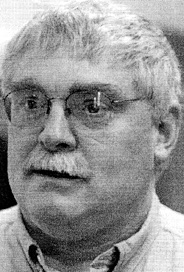
Tim Bowers
By Ed Runyan
The city qualified for another $41,895 in state traffic enforcement money.
WARREN — In a midsized city such as Warren, it might surprise some drivers to find that police are writing tickets for motorists who are taking illegal shortcuts through gas station parking lots and pedestrians who are jaywalking.
But, like Youngstown, which enacted a zero-tolerance policy for lesser offenses such as traffic violations in 2007 after a quadruple homicide in January in an abandoned house, Warren has been conducting its own war on lesser offenses in recent months.
The biggest difference is that Warren has not had as much police overtime money available to fund it.
With Warren facing a $1.75 million budget shortfall in June, the mayor and service director ordered that most overtime be eliminated for the remainder of the year.
At the same time, neighborhood watch groups complained in August that prostitution, drug dealing and other crimes were rampant in the city.
Warren Police Capt. Tim Bowers said it is difficult for police to conduct undercover stings to catch people who are paying for sex because such investigations require a lot of manpower — but they can attack prostitution and other crimes through lesser offenses.
For instance, at 5 p.m. Sept. 29, a police officer wrote a citation to a 39-year-old Newton Falls woman for walking in the road near the intersection of Belmont and North Park avenues.
At 10:30 p.m. Sept. 26, an officer wrote a ticket to a 19-year-old Warren woman for walking in the road when a sidewalk was available at the intersection of Colonial Street and Adelaide Avenue Southeast.
Writing a ticket to a suspected prostitute for jaywalking just might lead the person to move to another location, Bowers said, because the jaywalking carries a similar penalty to prostitution.
“What we’re trying to do is give [residents] some peace — move [prostitutes] somewhere else, within the budget we have,” Bowers said.
For two weeks in late September, the city attacked high-nuisance areas with additional officers working four-hour shifts to reduce crimes such as prostitution and playing loud music. The extra patrols didn’t require overtime payments to officers. Instead, the extra hours were available by shifting schedules, Bowers said.
Along with the two-week blitz, officers working their regular shifts have been encouraged to write more citations, Bowers said.
“We’ve told the [patrol officers] we need to do whatever we can to serve the public,” Bowers said.
In August, with 116 hours of overtime paid for by a grant from the Ohio Department of Public Safety’s visibility enforcement grant, the department wrote 510 traffic citations, up dramatically from June’s 282 citations and July’s 311 citations. The grant money can only be used for traffic enforcement, Bowers said.
The citations ranged from speeding to seat-belt violations to driving on a suspended driver’s license or having no front license plate. Many such traffic stops do turn up drug dealing or weapons violations, Bower said.
“It’s being proactive,” he said. “The police on the street know the good guys from the bad guys,” Bowers said, explaining that when an officer knows about a drug house and then sees a car matching a certain description, he can make an informed choice about whether to make a traffic stop when a violation is observed.
Courts have upheld convictions for serious offenses arising from such traffic stops, Bowers said.
Bowers learned last week that the department had been approved to receive another $41,895 for the fiscal year Oct. 1, 2008, through Sept. 30, 2009, for its state high-visibility enforcement — a 4 percent increase over the amount it got for last year.
Warren’s police department is the only one in Trumbull County that qualifies for the visibility grant. It qualifies based on the city’s traffic accident statistics.
runyan@vindy.com