 43
43

Two death-penalty murder trials to start this week in Youngstown
 Photo
Photo
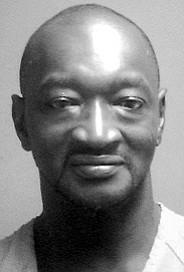
Bennie Adams
 Photo
Photo
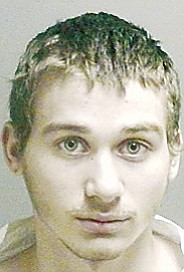
Michael Davis
Defendants in a fire that killed six people this year and in a 1985 murder are going on trial.
VINDICATOR STAFF WRITER
YOUNGSTOWN — Juries will be selected this week for two death-penalty murder trials, the first such trials here in 41⁄2 years.
However, the Mahoning County Common Pleas Court judges presiding over them have extensive experience with such cases in their legal or judicial careers, or both.
“It should go smoothly,” said Judge Timothy E. Franken, who will preside over the trial of Bennie L. Adams, who is charged with killing a Youngstown State University student almost 23 years ago.
“It’s been done enough. We’re not inventing anything,” added Franken. Before becoming a judge last year, Franken tried at least seven death-penalty cases as an assistant county prosecutor and at least six as a defense lawyer.
“I’ve been through this half a dozen times before,” said Judge R. Scott Krichbaum, who will preside over the trial of Michael A. Davis, the man charged with setting the Jan. 23 East Side house fire that killed six people.
Besides presiding over six previous death-penalty trials from the bench, Krichbaum represented six defendants in capital cases as a defense lawyer. These were among 48 murder-case defendants he represented as a defense lawyer before he became a judge.
Krichbaum, who has been on the bench since 1991, is the court’s administrative judge.
The last death-penalty trial he presided over as a judge was the fall 2003 trial of Martin L. Koliser Jr., who was sentenced to death for the murder of Youngstown Patrolman Michael T. Hartzell. Koliser later committed suicide in prison.
The most recent capital case tried here was that of John Drummond Jr., 30, who remains on death row after having been sentenced to die by Judge Maureen A. Cronin in Februrary 2004.
A jury convicted Drummond in the death of 3-month-old Jiyen C. Dent Jr., who was fatally shot in the head as he sat in a baby swing in his East Side residence.
Krichbaum, who conducted a Friday orientation for 100 potential jurors in the Davis case, said jury selection for Davis’ trial “won’t take more than a week.”
Davis, 18, of Bennington Avenue, will be tried on a 29-count aggravated-murder and aggravated-arson indictment with death-penalty specifications in the fire at 1645 Stewart Ave. Authorities call that fire the largest mass murder in the city’s history.
Carol Crawford, 46; her daughter, Jennifer R. Crawford, 23; and Jennifer’s four children, Ranaisha, 8; Jeannine, 5; Aleisha, 3; and Brandon, 2; died in the blaze. Five other people escaped from the burning house.
The crime brings the possibility of the death sentence because the aggravated murders were committed while the perpetrator was committing another felony (aggravated arson), two or more people were killed, and four of the deceased were under age 13.
For the Davis case, prospective jurors will be scheduled at intervals for individual interviews by the judge and the prosecuting and defense lawyers out of earshot of other potential jurors.
Davis is represented by Attys. James Gentile and Ronald Yarwood, and the case is being prosecuted by Paul J. Gains, county prosecutor, and J. Michael Thompson and Natasha K. Frenchko, assistant county prosecutors.
Retired visiting Judge Charles J. Bannon will cover the rest of Krichbaum’s docket while he is occupied with the death-penalty trials of Davis and Terrance Tate. The Tate trial is scheduled to begin Nov. 3.
In the Adams case, 96 potential jurors, who have already completed and returned questionnaires to the court, will converge on the courthouse for a Monday afternoon orientation.
After that, they’ll be scheduled for interviews in groups of five and later as a full panel.
Franken predicted jury selection for the Adams trial will take 31⁄2 days.
With 32 names appearing on the prosecution’s witness list, Dawn Cantalamessa, an assistant county prosecutor, predicted the prosecution’s case would take three days to present.
Adams, 51, of Hollywood Avenue, is charged with aggravated murder with a death-penalty specification in the Dec. 29, 1985, strangulation of Gina Tenney, 19, who was Adams’ upstairs neighbor in an Ohio Avenue duplex.
Tenney’s body was found floating in the Mahoning River near West Avenue on Dec. 30, 1985.
Adams was indicted and arrested in the cold case last fall after a DNA match was found in evidence police had preserved for 22 years.
Although Franken has dismissed felony charges of aggravated robbery, aggravated burglary, kidnapping and rape in the Adams case due to expiration of the six-year statute of limitations for those charges, those allegations remain as elements in support of the death-penalty specification.
There is no statute of limitation for murder charges under Ohio law.
Adams is represented by Attys. Lou DeFabio and Anthony Meranto, and the case is being prosecuted by Cantalamessa and Martin P. Desmond, another assistant county prosecutor.
In both the Davis and Adams cases, prosecuting and defense lawyers will be allowed to excuse six potential jurors without giving a reason. An unlimited number of jurors may be excused for good cause.
In addition to the regular panel of 12 jurors, four alternates will be seated for the Adams trial. Krichbaum and the lawyers in the Davis trial agreed that two alternates would be sufficient there.
In both cases, jurors will be sequestered in a hotel with no radio, TV or Internet access in their rooms during any overnight breaks in their deliberations.
“A capital jury has to be sequestered during deliberations to avoid any type of potential outside influence,” Krichbaum explained.
In each case, jurors will return for a penalty-determination phase if they find the defendant guilty of any death-penalty specification.
Franken, who has a small courtroom, has issued a five-page list of rules for media coverage of the Adams trial and has restricted coverage to one TV camera and two still photographers at a time.
Krichbaum hasn’t issued such detailed rules for the Davis case but said he will allow one TV camera each from channels 21 and 27. He said he expects the media “to act courteously and be unobtrusive.” He has barred lawyers in that case from granting media interviews.
Krichbaum concluded: “It’s not a media event; it’s a trial.”