 43
43

Palin battled clergy on bar hours
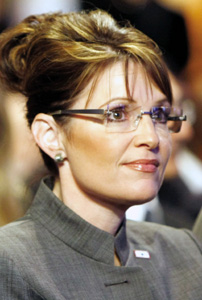
 Photo
Photo
Sarah Palin
The measure called for Wasilla bars to close a few hours earlier than the traditional 5 a.m. last call.
Chicago Tribune
Sarah Palin may be the heroine of the religious right, but the Rev. Gene Straatmeyer vividly recalls a public run-in he once had with the now-Republican vice-presidential nominee over clergy support for a crackdown on bars.
It was August 1996, just weeks before Palin’s election to the office of mayor of tiny Wasilla, Alaska. And Straatmeyer, a local Presbyterian minister and head of two church coalitions, testified at a city council hearing for a measure to shorten the traditional 5 a.m. last call by a few hours. The city’s police chief asked for it to combat a wave of drunken driving and spousal abuse.
Palin built her subsequent political rise to Alaska governor and a spot on the national Republican ticket by actively courting the support of Christian evangelicals. But on that night, then-councilwoman Palin stunned Straatmeyer by not only opposing the idea but also sternly lecturing him that as a man of the cloth he should butt out.
“After I got done she said, ‘I go to Assembly of God Church and I am a Sunday school teacher there and I see no relationship between my Christian faith and what hours the bars close,’” recalled Straatmeyer, now living in Texas. “She felt it was out of line for me to testify on behalf of the church groups I represented.”
In her recent nationally televised debate with Democratic rival Joe Biden, Palin spoke forcefully of the need to export the reality of “Wasilla Main Street” to Washington. And one of the realities to this day is that Palin’s Wasilla remains a town with near-round-the-clock bars and a serious drunken-driving problem.
The bar flap represents a pivotal interlude in the political development of Palin, who sided with local saloon keepers and cast the deciding vote against a measure to reset pub closing times to 2:30 a.m. weekdays and 3 a.m. weekends. Tavern owners then rallied around Palin’s successful challenge to Wasilla’s longtime mayor, with campaign records showing that two of them alone provided 15 percent of the campaign cash she took in from supporters.
Within months of taking office, Palin fired veteran Wasilla Police Chief Irl Stambaugh, the author of the bar-hour reduction plan.
Palin “voted with the majority on an issue that ultimately would have negatively impacted the local economy,” a spokesperson for the vice-presidential candidate said in explaining Palin’s vote.
Weeks before the measure’s rejection, Stambaugh distributed a 22-page memo on it to Palin and other council members. At the time, Wasilla boasted a population of 4,635.
Yet Stambaugh argued that drunken-driving arrests were “exceptionally large” for such a small place — averaging more than one every other day in 1994. And he backed up those statistics with more numbers showing that half of those nabbed were caught between 2 a.m. and 7 a.m., and most had blood-alcohol levels at least double the legal limit.
The chief’s submission included letters from social service agencies, Straatmeyer’s ministerial alliances, and the local district attorney. Some argued that Wasilla had become a magnet for problem drinkers from Anchorage an hour to the south, where bars closed earlier.