 43
43

Break for baby killing suspect? Terrance Tate’s confession must be excluded, an appellate court ruled.
 Photo
Photo
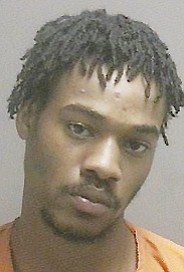
Terrance Tate, of Youngstown.
 Photo
Photo
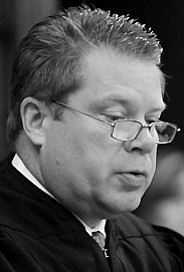
Judge John Durkin listens to testimony - Terrance Tate, whose confession was suppressed by the 7th District Court of Appeals, 8:30 a.m. The prosecution is appealing the suppression to the Ohio Supreme Court. Tate faces the death penalty.
YOUNGSTOWN — A confession by a suspect in the killing of a baby must be excluded from evidence because it was obtained without his first receiving the warning of his right to remain silent, an appeals court has ruled.
A three-judge panel of the 7th District Court of Appeals unanimously upheld the decision of the trial judge, John M. Durkin of Mahoning County Common Pleas Court, to exclude Terrance Tate’s confession from evidence in Tate’s death penalty murder trial.
The prosecution, which said the confession was critical to its case, appealed Judge Durkin’s decision.
Tate, 23, of Hilton Avenue, awaits trial on an aggravated murder charge in what police say was the fatal beating of Javonte Covington on his first birthday in April 2006.
Rhys B. Cartwright-Jones, assistant county prosecutor, said he will appeal Thursday’s decision to the Ohio Supreme Court and that he has asked Judge Durkin to keep Tate in the county jail pending that appeal.
Last Aug. 1, Judge Durkin ruled the confession had to be excluded from the trial because it resulted from a police interrogation of Tate while he was in custody at the police station and before police warned him of his right to remain silent.
Judge Durkin cited U.S. Supreme Court rulings that police must give the warning before they interrogate someone who is in police custody. The warning is known as the Miranda warning based on the landmark 1966 Miranda v. Arizona U.S. Supreme Court decision.
In arguments before the appellate judges, the prosecution said Tate was not in police custody when he confessed, but the defense said Tate was in custody when he gave his incriminating statement.
Cartwright-Jones told the appellate panel Tate went voluntarily to the police station, wasn’t handcuffed or formally arrested when he arrived there and “was free to leave until he made an incriminating statement.”
After asking routine booking questions, police asked Tate if he had seen anyone hit Javonte, to which Tate replied that he had beaten Javonte, according to police testimony at the evidence suppression hearing before Judge Durkin.
After that, police said they read Tate the warning and conducted a videotaped interview, in which Tate repeated his confession.
Because Tate was in custody and because he wasn’t warned before questioning began, all of Tate’s comments “both before and after the Miranda warnings were given must be suppressed,” the appellate judges ruled.
In oral arguments, Tate’s lawyer, John B. Juhasz said a reasonable person would believe he was in custody under the circumstances Tate faced.
A police lieutenant instructed Tate by telephone to come immediately to the police station and told Tate his mother wouldn’t be released from the station until he got there, Juhasz said.
Police confiscated the car in which Tate arrived at the station, yelled profanity at him, called him a liar and threatened to jail him, Juhasz told the appeals court.
The appellate decision was rendered by Judges Cheryl L. Waite, Gene Donofrio and Joseph J. Vukovich.
milliken@vindy.com