 43
43

Warren teen aims for pilot’s license
 Video
Video
By HOLLY SCHOENSTEIN
Warren teen takes aim for pilot license
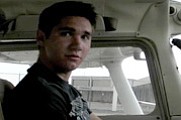
VIENNA — Less than two years after becoming legal to drive on the roads, 17-year-old Dan Miller of Warren is pursuing another license — this time for the sky.
Miller, who will be a senior at Howland High School this fall, is the youngest person and first teenager to take aviation lessons at Western Reserve Flight School at the Youngstown-Warren Regional Airport in Vienna Township.
When he gets his pilot’s license, he’ll be part of a unique population — the estimated 2 percent of certified teenage pilots in the U.S., according to the Federal Aviation Administration. This percentage has held steady over the last 10 years.
He doesn’t mind being the only teenage pilot at Western Reserve, though, because he was looking for something different to do this summer besides playing soccer and working part time at Dairy Queen in Howland.
“It just seemed like something that would be fun to do,” Miller said. “My cousin flew for the Navy for a little bit, but he’s not the reason I became interested in it.”
He attended Western Reserve’s Aviation Day in March, during which he sat in the pilot’s seat — and even got to fly a little — during the 30-minute “Discovery Flight.”
“Before anybody even starts the [flight instruction] process, we have a Discovery Flight for $59 where the student sits in the pilot’s seat with a CFI [certified flight instructor] to see if they would like to fly,” said Matt Stroney, Western Reserve co-owner and flight instructor.
The Discovery Flight was Miller’s first time in a small plane. He said it was both nerve-wracking and exciting.
“I remember the first time; I was sweating and had shaky knees,” he said. Now, he describes flying the 1985 Cessna 172 as “just like driving a car.”
FAA regulations allow pilots to fly a plane at any age. At 16, they are allowed to fly by themselves, without a flight instructor or passengers. A pilot must be at least age 17 and have accumulated a minimum of 40 hours of flight instruction to obtain a recreational pilot’s certificate or a private pilot’s certificate. The FAA also has additional requirements for the certificate.
Half of Western Reserve’s aviation students take lessons as part of a career change, and the rest are interested in flying as a hobby.
Teenage pilots learn the same material and pay the same fees.
So far Miller has completed 15 hours of flight instruction since beginning lessons the first week of June. He hopes to get his pilot’s license this fall.
Stroney and Dominic Santangeto, flight instructor and co-owner of Western Reserve, said pilots who are motivated can get their licenses in about four months, but there is no time limit.
Other teens have taken the Discovery Flight but have not moved forward for a variety of reasons.
“When people realize how much there is to learn, some people get turned off by it. Plus, it’s a big expense,” Santangeto said.
He said some people run out of money for course fees, but others are intimidated to fly solo. Course fees run about $6,000 to $6,900, which include flight instruction, plane rental and textbooks, Stroney estimated.
The Cessna that Miller flies, a typical training plane, costs $85 per hour. Miller said the cost of lessons and flying the plane are the only negatives right now. His parents have been paying for the lessons, but he may have to pay part of the fees on his own in the future.
In addition to learning how to fly, he has learned how to complete a pre-flight inspection. This includes checking the oil level, checking the fuel to make sure there’s no condensation seeping into the tank, and inspecting the wheels for wear and tear. But before Miller even begins the pre-flight inspection, he checks the weather on a government Web site to determine if conditions are favorable for flying.
The ideal age for teens to start flight instruction is 16, Stroney and Santangeto said.
Stroney, who has been teaching at Western Reserve for three years and flying for more than 20 years, says he has noticed a decrease in the number of teenage pilots in the last five years.
The reasons for the decrease could be similar to the reasons people shy away from flight instruction after taking the Discovery Flight.
To make lessons more affordable, Western Reserve is developing a scholarship program with the Experimental Aircraft Association, which may cover half the cost. Specific details are unavailable because finalization of the program is still one to two years away.
The airline industry is experiencing a surplus in pilots because of the layoffs several airlines announced earlier this year.
Kit Darby, owner and president of Atlanta-based AIR Inc., tracks employment trends in the aviation industry.
The quick change from pilot shortage to surplus was rare, he said.
“It’s one of the fastest changes we’ve ever scene. For it to happen in about three months is amazing,” Darby said. “Four months ago we were in one of the worst shortages I’ve ever seen in 30 years.”
He said there are about 90,000 airline pilots employed, and he is expecting cutbacks ranging from 5 percent to 15 percent per airline.
But the surplus has not deterred Miller from considering a career in aviation, and he is confident he will get a job after graduation. He has been researching colleges with aviation programs in Ohio and is particularly interested in Bowling Green State University.
Stroney believes the surplus will eventually correct itself.
“Air travel isn’t going away. We’re just in an adjustment period,” he said.
Students at other universities don’t appear to be swayed by it, either. According to Dr. I. Richmond Nettey, associate dean of the College of Technology and Senior Academic Program Director of Aeronautics at Kent State University, the number of students enrolled in Introduction to Aviation for this fall semester is the highest it has been in a decade. More than 100 students have enrolled.
hschoenstein@vindy.com