 43
43

Retiring planner has faith in panel
By Ed Runyan
There are limits to how much government can do to help businesses grow, says the outgoing director.
 Photo
Photo
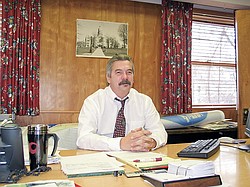
RETIREMENT PLANNING: Alan Knapp has secured about $50 million in grants while serving with the Trumbull County Planning Commission. He's retiring after nearly three decades.
WARREN — “When I came here in 1981, there was a national recession and the county was really hurting,” said Alan Knapp, director of the Trumbull County Planning Commission.
“I didn’t cause either one,” he added with a laugh.
Twenty-seven years later, a month before he is set to retire, Knapp finds himself looking at an eerily similar situation, with the country in recession and the local economy against the ropes because of job losses at local businesses.
In 1981, the local problem was the devastation brought on by steel mill closings. In 2008, the threat comes primarily from the decline of the domestic auto industry — especially Delphi Packard and General Motors.
Though Knapp was interested in recreational planning when he first came to Trumbull County fresh out of the University of Akron’s master’s degree program in urban planning in 1981, he quickly went to work trying to help businesses and low-income communities.
During one month in 1983, Trumbull County had a 23 percent unemployment rate.
“That was one of the lowest times for Trumbull County since the Depression,” Knapp said.
Fortunately, the Ohio and U.S. governments stepped in to help.
In 1982, the state’s Community Development Block Grant program was formed to provide counties with money to build water and sewer lines in areas that were too poor to get them on their own.
In 1983, money was made available to make low-interest loans to companies to help them expand or preserve jobs.
By 1984, the county had a revolving loan fund, which contained the state money for job creation and retention that had been repaid to the county and was now available for other companies to borrow.
By 1988, the county was creating enterprise zones to allow companies to qualify for tax abatements that would encourage them to provide additional jobs.
Knapp was involved in running all of those programs, while still helping out with recreational planning — such as creating a bike trail plan (some of which turned into the Western Reserve Greenway), countywide trails plan and grant writing to secure money to develop Foster Park in Newton Township.
And after he leaves, Knapp is confident the planning commission will continue to secure millions in grants and continue to develop recreational opportunities.
Knapp uses a type of gallows humor when joking about not causing economic downturns in the county. He knows he hasn’t caused the problems, but he continues to search for the “magic bullet” that will reverse the area’s economic declines.
After 27 years of securing about $50 million in grants, including 4 1‚Ñ2 years as planning commission director, Knapp said he’s proud of the work the commission has done.
In many counties, a planning commission merely handles requests for changes in plats, deeds and zoning, with the county commissioners hiring private companies to do the rest.
But Knapp’s former boss at the planning commission, Ed Kutevac, worked hard to lobby Columbus for grant money and set the tone for today’s department.
“I think we’ve done a really good job,” he said, adding that in Julie Green, the department has “the best grant person in the Mahoning Valley.”
But it can be hard to live up to people’s hopes for Trumbull County’s economic future, Knapp said.
With jobs being taken away from Trumbull to the southern United States, Mexico and now to China and every part of the globe, keeping jobs at home is difficult, he said.
“Even with all those tax abatements [about 150 of them during Knapp’s time], we’ve lost 17,000 manufacturing jobs in the last 10 years,” he said.
And though the total number of workers in the county has remained steady over 27 years, the amount of money each person makes has dropped, with service jobs replacing manufacturing jobs.
“Government can help, but we don’t have total control over the private sector,” he said.
Knapp said he hopes the region’s newest economic development tool, the startup of an economic development office within the Western Reserve Port Authority, will produce positive results.
He had a recent discussion with the office of U.S. Sen. George Voinovich, R-Ohio, about the possibility of a congressional appropriation in 2009 that would provide a 50-50 match of the $375,000 per year local government bodies have pledged to provide to the development office.
He remains optimistic the money will be provided.
“I have tremendous confidence in the staff and the new director,” Knapp said of William F. Miller of Cincinnati, who begins his transition into Knapp’s job starting Monday.
Though Knapp has recently gotten married and moved outside the county, he said it will be difficult to separate himself from the economic interests of Trumbull.
The job losses at the General Motors plant in Lordstown are on his mind even as he prepares to depart.
“We really need manufacturing jobs in this county,” he said.
SEE ALSO: County conservationists accept accolades at annual banquet.
runyan@vindy.com