 43
43

New judge selected for murder case
 Photo
Photo
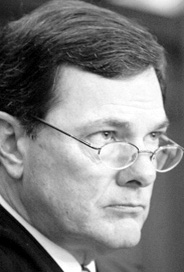
Mahoning County Common Pleas Court Judge R. Scott Krichbaum
 Photo
Photo
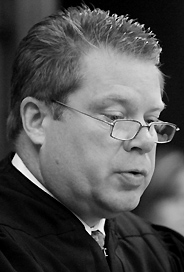
Judge John Durkin listens to testimony - Terrance Tate, whose confession was suppressed by the 7th District Court of Appeals, 8:30 a.m. The prosecution is appealing the suppression to the Ohio Supreme Court. Tate faces the death penalty.
By Ed Runyan
The mother of the dead boy had accused the defendant of hitting him 10 to 20 times.
YOUNGSTOWN — Judge R. Scott Krichbaum has been selected through a random process to complete the 21‚Ñ2-year-old capital murder case against a Youngstown man accused of beating a girlfriend’s 12-month-old son to death.
Judge Krichbaum was one of two Mahoning County Common Pleas Court judges eligible to handle the case after fellow Judge John M. Durkin stepped down from the case Monday.
In an interview Wednesday, Judge Durkin said he changed his mind on whether to stay on the case after receiving new information Monday, a short time after holding a hearing in his courtroom in which he said he would not step aside.
Judge Durkin said the new information “required me to recuse myself because I might be required to be a witness at a future proceeding.” He declined to elaborate on what type of future proceeding or what type of information he learned.
Judge Durkin placed an “order to seal” on the discussions held in his chambers just after Monday’s hearing, said Attorney John Yuhasz, one of the defense attorneys representing Terrance Tate in the case.
Yuhasz and Judge Durkin said because of the order to seal, none of the parties involved in the case can comment on what was said in the judge’s chambers about the recusal.
Involved in the conversation were Judge Durkin and attorneys from the Mahoning County Prosecutor’s Office and Tate’s defense team.
The Vindicator has made a public records request to Judge Durkin asking for transcripts of the discussion. Judge Durkin’s office said such a transcript is not a public document.
Judge Krichbaum, the court’s administrative judge, received Judge Durkin’s judgment entry Tuesday asking him to reassign the case.
After asking the three other judges whether they would be able to take it, Judge Krichbaum learned that Judge James C. Evans had a familiarity with the Tate family and was declining on those grounds.
Judge Timothy E. Franken was lead prosecutor on the Tate case before becoming judge and is therefore ineligible to handle it, Judge Franken said.
Judge Krichbaum followed the procedure used in such cases, which involves using a bottle containing numbers representing the judges, and Judge Krichbaum’s number came up instead of Judge Maureen A. Sweeney’s.
Tate was charged by Youngstown police with killing a girlfriend’s 12-month-old son, Javonte Covington, in April 2006.
Court records say the boy’s mother, April Ford, accused Tate of hitting the boy in the face between 10 and 20 times and in the chest three or four times and slamming the boy into a door or wall the morning he died.
But a critical component of the case against Tate — a confession he gave to police of having hit the boy the night before he died — was ruled inadmissible by Judge Durkin because of a failure by Youngstown police to give Tate a warning of his constitutional rights at the outset of his police interview.
The 7th District Court of Appeals upheld the ruling, and prosecutors are now asking the Ohio Supreme Court to review the matter.
Dawn Cantalamessa, an assistant county prosecutor, asked Judge Durkin last week to remove himself from the case, citing two recently discovered letters prosecutors say they didn’t receive from Judge Durkin after Tate sent them to the judge in May 2006 and August 2007. Tate’s defense team had the letters.
One of the letters said Tate gave police false information about hitting the boy to keep the boy’s mother from going to jail.
Cantalamessa said the letters could have been used to impeach Tate’s truthfulness during the hearing on suppressing Tate’s confession.
She said Judge Durkin should step aside from the case because he might be called to testify regarding the letters.
During the hearing Monday, Judge Durkin said his office has a standard practice of sending such letters to the prosecution and defense, so he has not violated a legal canon that prevents a judge from having “ex parte” (meaning one-sided) communications with a party in a legal action.
runyan@vindy.com