 43
43

Gov. Strickland fails to keep campaign promise on school funding
 Photo
Photo
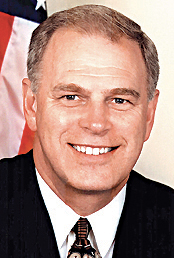
Ohio Governor Ted Strickland (D-Lisbon)
In August, the governor said the state isn’t using school funding in a fair way.
COLUMBUS (AP) — One year after his election as governor — in large part on promises of reforming the state’s way of funding public schools — Democrat Ted Strickland has yet to move on the issue.
During his campaign, Strickland was highly critical of how Republican governors and legislative leaders handled the issue. The Ohio Supreme Court declared the funding system unconstitutional in 1997, saying its reliance on local property taxes had created wide disparities between wealthy and poor districts.
The court in December 2002 ruled that the system remained unconstitutional but didn’t give lawmakers a deadline to fix the problem and ended its jurisdiction in the case.
Strickland promised supporters that the issue would be a priority once he took office.
“I am so committed to solving this school-funding issue that, if I become governor and I do a lot of wonderful things, but I fail to address this school-funding issue, I will have been a failed governor,” the candidate said in one speech.
However, a year after his election as the first Democratic governor in 16 years, his solution remains only in the discussion stages.
He has been busy getting a two-year budget passed, selling Ohio’s tobacco lawsuit payments for $5.5 billion to speed up school construction commitments and offer tax breaks for elderly property owners, expanding health care for uninsured children and taking on a restructuring of how electric power is sold.
But Strickland has not yet tackled school funding, although what he’s seen since digging into the budget and speaking with education leaders apparently has allowed his thinking to evolve.
“I believe the current system is underfunded, and I believe the current system is not appropriately funded,” candidate Strickland told reporters after speaking to the Ohio Education Association in May 2006.
In August of this year, however, Strickland said, “I think we’ve got probably all the money we need in education, we just don’t utilize it in a way that is fair and appropriate.”
Many educators who have carped about the current system don’t seem publicly upset.
“We feel quite good that the governor is taking the time to examine this issue and explore the interest of the various stakeholders, something that hasn’t been done in the past,” said Dennis Reardon, executive director of the Ohio Education Association, the state’s largest teachers union.
Since March, Strickland has had more than a dozen private meetings with education, business and other groups to discuss education reform. He says the issue is never far from his mind.
“It’s not something that we’ve put on the back burner somewhere, but it’s not something that I’m going to allow myself to be tied to a timetable of some kind,” he said. “I would like to do it yesterday if I could. But I’m confronted with needing the conditions that could really lead to a successful outcome.”
Those who have met with Strickland don’t believe the problem can be quickly solved.
“He comes across as genuine and, because of that, we all think it’s a long-term thing and it’s not going to happen overnight,” said David Varda, executive director of the Ohio Association of School Business Officials. “But if we’re sitting in 2009 and having this discussion, we’d be disappointed.” we’re not talking about a plan.”